

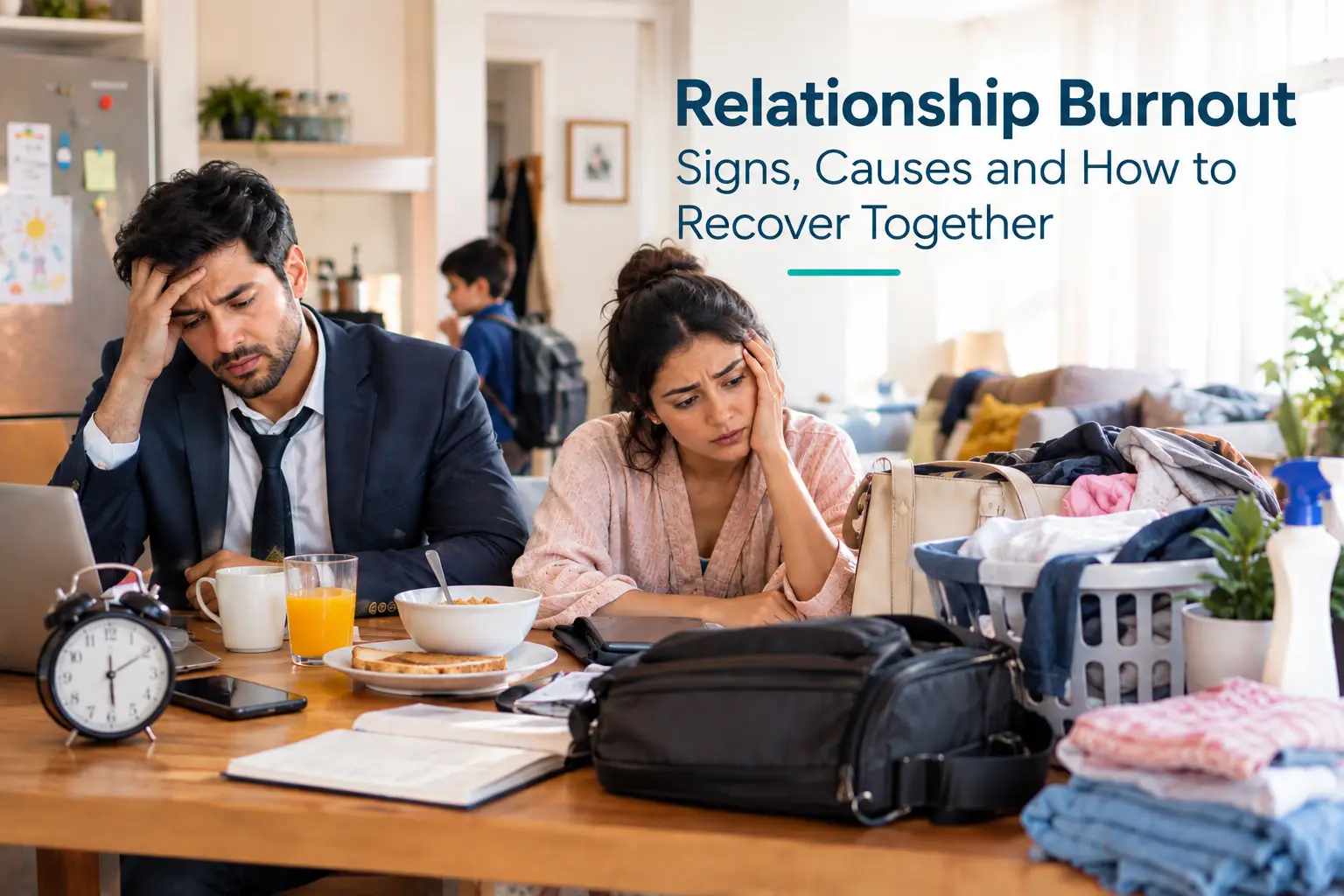
Relationship burnout is a state of emotional exhaustion that develops when ongoing stress, unresolved conflict, unmet needs, or unbalanced effort leave one or both partners depleted. You may still love your partner while feeling tired of communicating, disconnected from intimacy, or unable to give more energy to the relationship.
Burnout in relationships differs from a normal difficult period. A temporary rough patch often improves when a specific stressor passes. Relationship burnout can continue because resentment, emotional distance, poor communication, or unequal responsibilities have become established patterns.
Recognizing the signs early gives you an opportunity to address the causes before disconnection becomes harder to reverse. Urise Counselling can provide relationship support when you and your partner need structured help with communication, boundaries, trust, or recurring conflict.
What Is Relationship Burnout?
Relationship burnout is prolonged emotional, mental, and physical exhaustion associated with persistent relationship stress. The exhaustion can affect patience, empathy, communication, affection, and interest in spending time together.
Burnout does not automatically mean that love has disappeared or that a relationship must end. A couple may care deeply for each other while lacking the emotional capacity to keep managing the same pressures.
Common contributors include unequal emotional effort, financial pressures, work stress, family issues, caregiving responsibilities, unrealistic expectations, and communication breakdown. When these pressures remain unresolved, relationship fatigue can develop into emotional detachment and resentment.
What Are the Signs of Relationship Burnout?
The clearest signs involve emotional exhaustion, reduced connection, negative feelings, lower patience, and avoidance. Five signs deserve particular attention.
1. You Feel Emotionally Drained
Feeling drained after ordinary interactions can indicate relationship burnout. You may feel that every conversation requires effort, that you have no energy left to resolve problems, or that your relationship has become another source of pressure.
Emotional exhaustion can develop after prolonged stress and repeated attempts to solve problems without meaningful change. You may still care about your partner, but feel unable to keep giving at the same level.
2. Intimacy and Communication Have Declined
Decreased intimacy can involve less affection, fewer meaningful conversations, or reduced sexual interest. A change in sexual frequency alone does not prove relationship burnout, but a broader pattern of emotional and physical disconnection deserves attention.
Communication issues can make the distance worse. When partners stop discussing needs openly, misunderstandings and resentment can accumulate.
3. You Have Increasingly Negative Thoughts
Frequent negative thoughts about your partner can signal emotional strain. You may focus on mistakes, interpret ordinary behavior negatively, or expect conversations to become difficult before they begin.
Occasional frustration is normal. Persistent negativity matters more when positive interactions become uncommon and criticism replaces curiosity or understanding.
4. Your Empathy and Patience Have Decreased
Burnout can reduce your ability to respond with patience when your partner is upset. Small habits may become unusually irritating, and you may struggle to understand your partner’s perspective.
Reduced empathy does not necessarily mean that you no longer care. Emotional exhaustion can limit the energy available for validation, compassion, and constructive communication.
5. You Avoid Spending Time Together
Lack of interest in shared time can indicate disconnection. You may prefer working late, spending time alone, or making separate plans because being together feels emotionally demanding.
Individual time is healthy. The concern arises when avoidance becomes consistent and shared activities no longer feel rewarding or meaningful.
What Causes Burnout in Relationships?
Relationship burnout usually develops through several pressures rather than one isolated event. Identifying the source helps you choose an appropriate recovery strategy.
Unbalanced Emotional and Practical Effort
One partner may manage most household decisions, caregiving tasks, emotional support, planning, or relationship repair. Carrying an unequal load for a prolonged period can create resentment and exhaustion.
Burnout becomes more difficult when the over-functioning partner repeatedly tries to fix every problem while the other partner remains less involved. Discussing responsibilities directly can reveal where the imbalance exists.
External Stress Factors
Work demands, financial pressures, family problems, parenting responsibilities, and caregiving can drain energy that would otherwise support the relationship. External stress does not automatically cause relationship burnout, but persistent pressure can intensify existing communication problems.
You need coping skills and realistic boundaries around outside demands when stress begins affecting your emotional availability.
Unrealistic Expectations
Unrealistic expectations can create repeated disappointment. A partner may expect constant attention, perfect agreement, effortless intimacy, or the ability to meet every emotional need.
Healthy relationships require clear expectations and boundaries. Discuss what each person needs, what each person can realistically provide, and which responsibilities require shared solutions.
Communication Gaps
Unspoken anger often becomes resentment. Avoiding difficult conversations may reduce immediate tension but leave important needs unresolved.
Open communication requires more than talking frequently. You need to express concerns clearly, listen to your partner, validate understandable feelings, and discuss practical changes.
Emotional or Physical Overload
Constant emotional support, physical work, caregiving, employment, parenting, or household responsibilities can leave little capacity for connection. When rest remains limited, emotional detachment may develop.
Recovery requires attention to individual wellbeing as well as relationship needs. A depleted person cannot sustain healthy communication through effort alone.
How Do You Overcome Relationship Burnout?
You can begin recovery by reducing pressure, communicating honestly, restoring individual energy, rebuilding connection, and seeking professional support when necessary.
1. Talk About the Burnout Directly
Tell your partner what you are experiencing without assigning blame. Explain that you feel exhausted, disconnected, or overwhelmed and identify the changes you want to explore together.
A direct conversation gives both partners information about the problem. Use specific examples rather than general accusations, and allow your partner to describe the partner’s own experience.
2. Stop Trying to Fix Everything at Once
Recovery becomes harder when every conversation focuses on another problem that must be solved immediately. Choose one or two priorities, such as communication, shared responsibilities, or time together.
Reducing pressure creates room for gradual change. You do not need to resolve every disagreement before you can reconnect.
3. Protect Time for Yourself
Self-care supports relationship health because rest restores the capacity required for patience and emotional availability. Spend time with friends, exercise, read, rest, or pursue activities that help you recover energy.
Personal time should not become avoidance. Maintain individual interests while preserving intentional connection with your partner.
4. Rebuild Positive Connection
Create opportunities for enjoyable interaction without making every shared activity a relationship discussion. Try a new class, visit a new place, cook together, attend an event, or choose another activity that both partners genuinely enjoy.
New shared experiences can interrupt repetitive routines and create opportunities for conversation and enjoyment.
5. Improve Communication Through Active Listening
Active listening requires attention to your partner’s meaning rather than preparing your next defense. Let your partner finish, summarize the message, and ask whether your understanding is accurate.
Reflective listening can sound simple: “What I understand is that you felt ignored when the decision was made without you. Is that correct?” This approach supports validation without requiring immediate agreement.
6. Set Realistic Boundaries and Expectations
Boundaries clarify what you can accept, what you need, and what responsibilities require discussion. Expectations clarify what each partner reasonably hopes to receive from the relationship.
Clear boundaries can reduce resentment because responsibilities and limits become visible rather than assumed.
7. Address Emotional Triggers
Notice situations that produce disproportionate anger, withdrawal, fear, or defensiveness. Triggers may connect to current relationship problems, previous experiences, or unmet attachment needs.
Understanding the trigger can help you choose a deliberate response instead of repeating an automatic pattern. Cognitive Behavioral Therapy (CBT) may help some individuals identify unhelpful thoughts and behavioral responses.
8. Rebuild Intimacy Gradually
Intimacy often becomes difficult when emotional safety has declined. Start with forms of connection that both partners find comfortable, such as affectionate touch, uninterrupted conversation, shared activities, or planned time together.
Do not treat sexual intimacy as a requirement for proving relationship health. Discuss changes in desire openly and address underlying resentment, stress, conflict, or emotional distance.
9. Consider Relationship Counseling
Relationship counseling can help when communication repeatedly breaks down or both partners struggle to change established patterns. Couples therapy provides structured support for discussing needs, conflict, boundaries, intimacy, and trust.
Professional support can be especially useful when the same issues return despite repeated conversations. A qualified therapist can help identify interaction patterns and guide practical communication work.
What Is the Difference Between Burnout and Falling Out of Love?
Relationship burnout describes exhaustion and disconnection caused by prolonged relationship stress, while falling out of love describes a change in romantic attachment or feelings. The two experiences can overlap, so persistent emotional distance deserves careful exploration rather than immediate conclusions.
You may still feel affection, trust, or commitment while feeling exhausted by unresolved problems. Conversely, reduced interest can have several causes. A professional assessment can help clarify what is happening.
When Should You Seek Professional Help?
Seek professional help when relationship distress persists, communication repeatedly fails, or emotional exhaustion prevents both partners from addressing problems constructively. Counseling can provide a structured environment for understanding conflict patterns and developing healthier communication.
Individual support may be more appropriate when one partner experiences significant personal distress, trauma-related difficulties, or safety concerns. Abuse, threats, intimidation, or coercive control require safety-focused support rather than standard couples conflict exercises.
How Long Does Relationship Burnout Recovery Take?
Relationship burnout recovery has no fixed timeline because recovery depends on the causes, duration, severity, and willingness of both partners to participate. Small changes may begin quickly, while rebuilding trust, communication, intimacy, and emotional connection can require sustained effort.
Track practical changes rather than expecting a sudden transformation. More respectful conversations, greater shared responsibility, increased affection, and fewer repeated conflicts can indicate meaningful progress.
Final Thoughts
Relationship burnout can affect emotional connection, intimacy, communication, patience, and your desire to spend time together. The condition often develops through prolonged stress, unequal effort, unmet needs, unrealistic expectations, or unresolved conflict.
Recovery starts with identifying the source of exhaustion rather than blaming one partner. Talk openly, reduce unnecessary pressure, protect personal recovery time, rebuild positive experiences, listen actively, establish realistic boundaries, and address emotional triggers.
You do not need to solve every relationship problem in one conversation. Consistent changes in communication and shared responsibility can create healthier conditions for reconnection. When burnout remains persistent or difficult to address together, relationship counseling and couples therapy can provide structured support.
Professional guidance can help you understand whether the main issue involves communication breakdown, emotional distance, relationship fatigue, external stress, or a deeper pattern that requires focused support.
Recovery requires attention to trust and validation. A partner needs to feel heard, respected, and included in decisions that affect shared life. Small consistent actions can matter: acknowledge effort, follow through on agreed responsibilities, make time for conversation, and recognize progress without demanding immediate perfection from either partner. These habits help replace resentment with clearer expectations and create more opportunities for reconnection during ordinary daily interactions. Habits can support recovery when both partners participate consistently.
Frequently Asked Questions
What does burnout in a relationship feel like?
Relationship burnout often feels like emotional exhaustion, detachment, irritability, and reduced interest in connection. You may feel tired after conversations, avoid shared time, struggle with patience, or experience less intimacy. These symptoms can occur while you still care deeply about your partner.
What are the three signs a relationship won’t last?
No three signs can reliably prove that a relationship will not last. Persistent contempt, unresolved disconnection, and unwillingness to address serious problems can indicate substantial relationship distress, but outcomes depend on circumstances, mutual effort, safety, and access to appropriate support.
How do you fix relationship burnout?
You can address relationship burnout by identifying the main sources of stress, discussing unmet needs, improving communication, and rebuilding positive connections. Personal rest, realistic expectations, shared responsibilities, active listening, and professional couples therapy can support recovery when burnout has become persistent.
Can relationship burnout cause emotional detachment?
Yes, prolonged relationship burnout can contribute to emotional detachment and reduced interest in connection. Emotional exhaustion may make communication, intimacy, and shared activities feel difficult. Addressing unresolved conflict, external stress, unequal effort, and unmet needs can help create conditions for reconnection.