
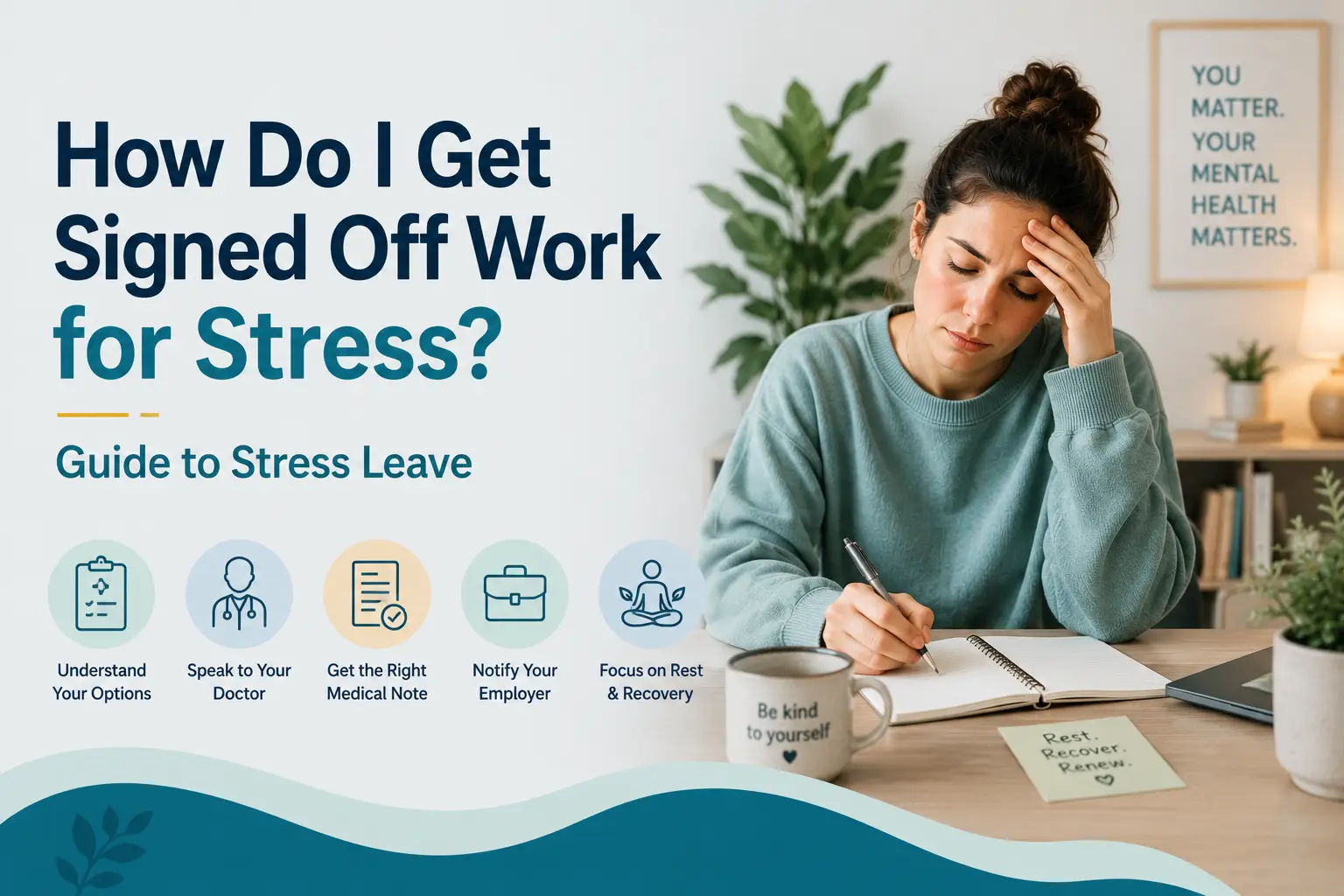
If work stress is affecting your mental or physical health and you cannot function normally at work, you can ask a healthcare professional to assess whether you are fit for work and issue a fit note when appropriate. In the UK, you can self-certify sickness for the first 7 calendar days. After 7 days, you need a fit note if your absence continues. The assessment focuses on your health and ability to work, not on proving that your workplace is objectively stressful.
How do I get signed off work for stress?
To get signed off work for stress, tell your employer that you are unwell, follow your sickness absence procedure, and speak with the healthcare professional treating you when a fit note is required. A GP is not the only professional who can issue a fit note. In England, doctors, registered nurses, occupational therapists, pharmacists, and physiotherapists can provide fit notes within their professional scope.
For the first 7 calendar days, you do not need a fit note. You can self-certify your sickness according to your employer’s process. After 7 days, contact the healthcare professional treating you for an assessment.
Is stress a valid reason for sick leave?
Yes. Stress can affect your physical health, mental health, concentration, sleep, behaviour, and ability to work, so a healthcare professional can assess stress as a health condition affecting fitness for work. NHS guidance lists symptoms such as headaches, stomach problems, faster heartbeat, difficulty concentrating, feeling overwhelmed, worrying, irritability, and sleep changes.
What should you tell your doctor about work stress?
Tell your doctor exactly how stress affects your health and your ability to perform your job. Explain your main symptoms, when symptoms started, how often symptoms occur, and whether symptoms affect sleep, concentration, appetite, mood, attendance, relationships, or normal daily activities.
Do not exaggerate symptoms, but do not minimize symptoms to appear capable. A clinical assessment depends on accurate information.
What happens during a stress assessment?
Before the appointment, write down the main symptoms and approximate start date. Note how symptoms affect attendance, concentration, sleep, communication, and essential duties. Bring a list of current medication and relevant treatment. These details help the clinician assess your functional capacity without requiring a prepared account of every workplace event.
A healthcare professional will assess your symptoms, health, functional capacity, and the effect of stress on your work before deciding what medical evidence is appropriate. The assessment may happen face to face, by telephone, or by video, depending on the service and clinical circumstances. If you have a trusted person who helps you manage appointments, you can ask whether that person may attend or support you. Tell the clinician about any concern that makes the appointment difficult, especially severe anxiety or panic. before the appointment begins today.
The clinician may ask about physical symptoms, mental health symptoms, previous conditions, medication, substance use, sleep, and workplace pressures. The clinician may discuss whether you are unfit for work or whether you may be fit with workplace adjustments.
A fit note can state that you are “not fit for work” or “may be fit for work” with advice about changes such as altered hours, amended duties, a phased return, or workplace adaptations.
Do you need a fit note for stress?
No, you do not need a fit note for the first 7 calendar days of sickness absence. You can self-certify the absence and follow your employer’s sickness reporting procedure. The 7-day period includes weekends and bank holidays.
If you remain off work beyond 7 calendar days, provide your employer with a fit note or another form of medical evidence accepted by the employer. A fit note is normally free when you have been ill for more than 7 calendar days.
How long can you be signed off with stress?
There is no fixed maximum period for stress leave set by a fit note. The healthcare professional decides the appropriate period based on your health, functional capacity, and clinical assessment. A fit note can cover a period from several days to longer periods, subject to the applicable rules.
For the first 6 months of a health condition, a healthcare professional can issue a fit note for a maximum of 3 months at a time. Further assessment can support an extension when symptoms continue.
Long-term stress-related sickness absence may involve occupational health, a stress risk assessment, workplace adjustments, or a return to work plan. The aim should be to support health and a safe return rather than treat the absence as a disciplinary failure.
What should you do after being signed off with stress?
After being signed off, follow your employer’s sickness procedure, follow clinical advice, and agree a reasonable communication arrangement with your employer. Your employer may need updates about your absence, but contact should remain appropriate to your circumstances and workplace policy.
Use the time away from work to address the health problems affecting your ability to work with support from Urise Counselling when appropriate.
What is a phased return to work?
A phased return to work is a gradual return with agreed changes to hours, duties, workload, or other working arrangements. A fit note may recommend adjustments that help you return safely, but the employer and employee must discuss what can realistically be implemented.
A return to work plan may include:
- Shorter working hours at the start.
- Fewer duties or lower workload.
- Temporary changes to shifts or deadlines.
- Regular wellbeing check-ins.
- A review date to assess progress.
- Occupational health input when additional workplace assessment is useful.
The exact arrangement depends on your health, job requirements, employer policy, and available adjustments.
Can an employer contact you while you are on stress leave?
Yes. An employer can maintain reasonable contact during sickness absence, but communication should support absence management rather than pressure you to work while you are unfit. Agree how often contact should happen, who should contact you, and what information you are expected to provide.
Do you get sick pay when signed off with stress?
Yes, eligible employees can receive Statutory Sick Pay (SSP) for sickness absence, including stress-related illness, subject to the current eligibility rules. Since 6 April 2026, SSP is payable from the first full day of sickness and is set at 80% of average weekly earnings or the statutory weekly rate of £123.25, whichever is lower.
Your employment contract may provide contractual sick pay that is more generous than SSP. Check your employment contract, sickness policy, or HR guidance for the exact payment rules.
Sick pay and fit-note rules are separate questions. A fit note provides medical evidence about fitness for work; payment depends on statutory and contractual eligibility.
Can stress leave affect your job?
Being absent because of stress does not automatically mean you will lose your job. Your employer must follow the applicable sickness absence procedure and should consider your health, medical evidence, workplace support, and relevant employment obligations before making decisions about prolonged absence.
A health condition may qualify as a disability under the Equality Act 2010 when the legal criteria are met. In that situation, reasonable adjustments may be required. Examples include adjusted hours, amended duties, additional breaks, or changes to workplace arrangements. The legal position depends on the facts of your case, so obtain specialist employment advice when dismissal, discrimination, or another formal employment action is involved.
Can work stress lead to reasonable adjustments?
Yes. Reasonable adjustments may help you remain in work or return to work when a health condition creates a substantial disadvantage in the workplace. Possible adjustments can include altered hours, amended duties, workload changes, additional breaks, or changes to communication arrangements.
The exact legal duty depends on the circumstances, including whether the condition meets the legal definition of disability. An occupational health referral can provide practical recommendations about workplace support, but occupational health does not replace your treating clinician’s medical assessment.
When should you seek professional help for work stress?
Seek professional help when stress is affecting your daily life, work capacity, sleep, mood, physical health, or ability to cope. NHS guidance recommends speaking with a GP when you are struggling to cope with stress or self-help measures are not helping. NHS Talking Therapies can provide support for anxiety and depression in England, with self-referral available for eligible adults.
Warning signs can include persistent anxiety, panic attacks, severe fatigue, insomnia, headaches, irritability, appetite changes, low mood, withdrawal, or reliance on alcohol or drugs to cope. Burnout can involve physical and emotional exhaustion, reduced motivation, detachment, and changes in sleep or appetite.
If you have an immediate mental health emergency or cannot keep yourself safe, seek urgent help through NHS 111, emergency services, or an emergency department.
What if your stress is caused by your workplace?
Tell your healthcare professional that workplace conditions are contributing to your symptoms, then consider raising the work-related problem through the appropriate workplace channel. Relevant issues can include excessive workload, unreasonable deadlines, bullying, harassment, discrimination, poor management, unsafe conditions, or lack of support.
An employer’s response may include a stress risk assessment, workload review, occupational health referral, workplace adjustments, or a return to work plan. Your medical assessment and your workplace complaint are separate processes, so one does not automatically determine the outcome of the other.
What should you do if stress leave becomes long term?
If stress-related sickness absence continues, stay engaged with healthcare reviews and work with your employer on appropriate support or return-to-work options. A longer absence does not automatically mean that your employment ends, and a fit note can be reviewed when your health changes.
Occupational health may assess how your health affects work and recommend practical adjustments. An employer may need to review workplace risks, consider reasonable adjustments where legally required, and follow a fair process when managing prolonged sickness absence.
Do not return before you are medically ready simply because you feel guilty about being absent. At the same time, do not assume that a long absence must continue until the end date on a fit note. You can discuss an earlier return with your employer when you are fit to work.
Frequently Asked Questions
How can you get signed off work for stress?
You can get signed off work for stress by discussing your symptoms and work capacity with a healthcare professional who assesses your fitness for work. Self-certify for the first 7 calendar days, then obtain a fit note when longer absence requires medical evidence.
How long can you be signed off work with stress?
You can be signed off work with stress for the period a healthcare professional considers clinically appropriate. There is no universal duration, although fit notes have issuing limits for certain periods, and further assessment can support an extension when symptoms continue.
What should you tell your doctor about work-related stress?
Tell your doctor how work stress affects your symptoms, health, sleep, concentration, mood, and ability to perform your duties. Give accurate details about duration, triggers, workload, workplace problems, previous support, medication, and any safety concerns without exaggerating or minimising symptoms.
Can you get a sick note for stress and anxiety?
Yes, you can receive a fit note for stress and anxiety when a healthcare professional assesses that the condition affects your fitness for work. A fit note can state that you are not fit for work or may be fit with adjustments.
What happens after being signed off work for stress?
After being signed off, you follow your employer’s sickness procedure, follow healthcare advice, and provide required medical evidence or updates. Your employer may discuss occupational health, workplace adjustments, or a phased return, while sick pay depends on statutory and contractual eligibility.