
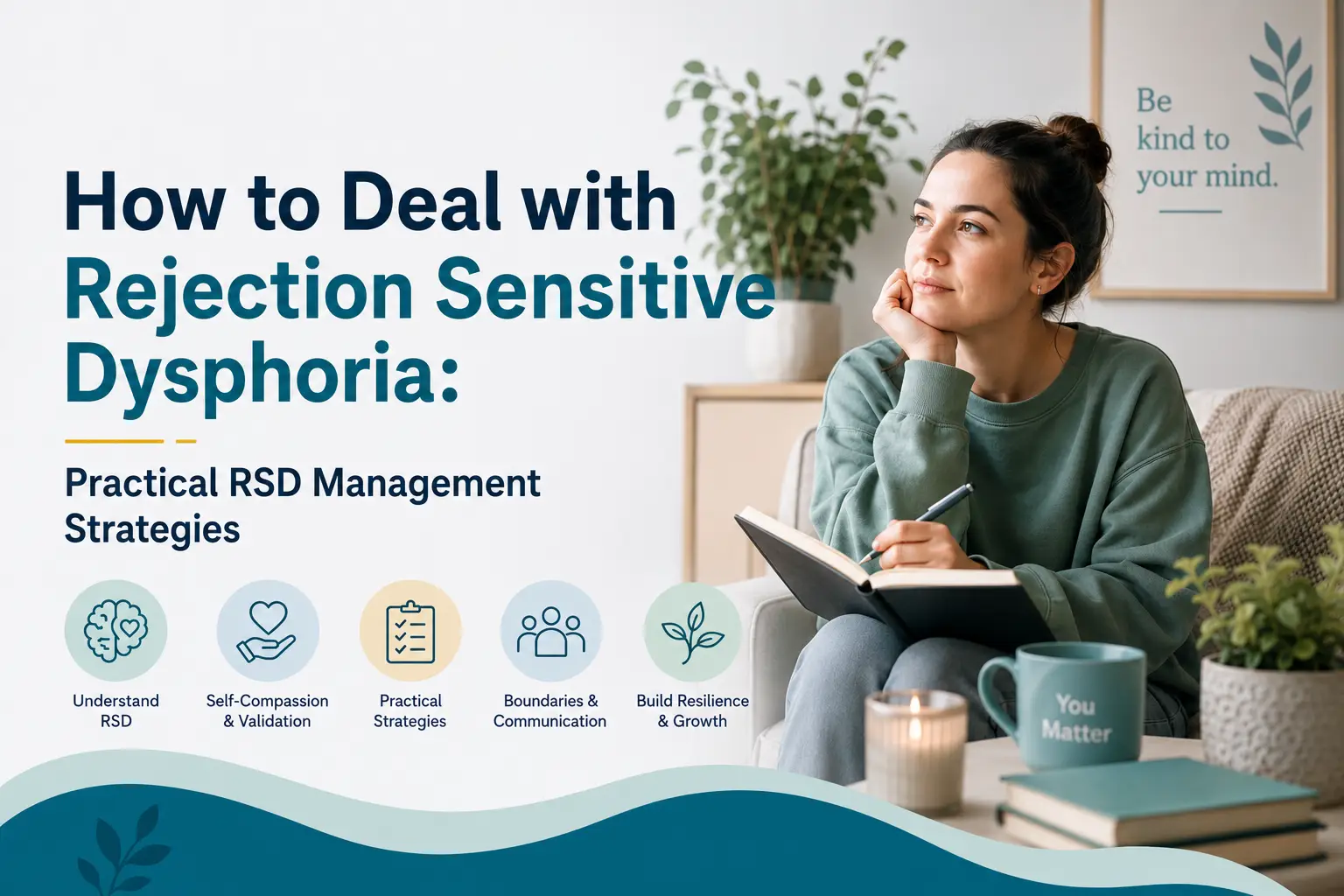
Rejection Sensitive Dysphoria (RSD) describes intense emotional distress linked to perceived or actual rejection, criticism, exclusion, or failure. RSD is not a standalone diagnosis in the Diagnostic and Statistical Manual of Mental Disorders, Fifth Edition, Text Revision (DSM-5-TR), but rejection sensitivity and emotional dysregulation can occur with Attention-Deficit/Hyperactivity Disorder (ADHD) and other mental health conditions. A clinical assessment can identify the underlying pattern and guide treatment.
At Urise Counselling, practical support can help you understand triggers, regulate strong reactions, challenge self-criticism, and build emotional resilience. Effective RSD management focuses on what you can do during an intense reaction and what you can change over time through therapy, ADHD care, communication skills, and structured coping strategies.
What is Rejection Sensitive Dysphoria?
RSD is a term used to describe a strong emotional response to perceived or actual rejection, criticism, failure, or disapproval. The response can involve sadness, anger, shame, anxiety, panic, withdrawal, or sudden emotional overwhelm. The term is widely discussed in ADHD communities, although RSD itself is not a formal psychiatric diagnosis.
ADHD and RSD often appear together because ADHD can involve emotional dysregulation and difficulty managing rapid shifts in attention, impulse control, and emotional responses. Rejection sensitivity can affect relationships, education, work, and self-esteem. A neutral comment can feel highly personal when your brain rapidly interprets the comment as evidence of rejection.
RSD does not prove that another person intended to reject you. The key issue is the intensity of your emotional response and the meaning you assign to the event. A clinician can assess whether ADHD, anxiety, depression, trauma-related symptoms, personality-related difficulties, or another condition better explains your experiences.
What does RSD feel like?
RSD can produce a rapid emotional reaction that feels difficult to control. Common experiences include:
- intense sadness, shame, anger, or anxiety after criticism
- fear of disappointing people or losing relationships
- repeated analysis of conversations after perceived rejection
- sudden withdrawal, people-pleasing, or attempts to repair relationships
- harsh self-criticism and thoughts of being inadequate
- difficulty accepting ordinary feedback at work or home
- avoidance of situations where evaluation or rejection seems possible
The rejection sensitivity spectrum varies from person to person. Your reaction can depend on previous experiences, current stress, sleep, ADHD symptoms, relationship dynamics, and the meaning attached to the event.
How to deal with rejection sensitive dysphoria in the moment
To deal with rejection sensitive dysphoria during an intense reaction, pause the interaction, regulate your body, separate facts from interpretations, and delay major decisions until emotional intensity falls.
Take a physical pause
Step away from the conversation for a few minutes when your reaction becomes overwhelming. Tell the other person that you need time to respond clearly. A short pause can prevent impulsive messages, arguments, abrupt relationship decisions, or workplace reactions.
Use a simple statement such as, “I need a few minutes to process this. I will respond when I can think clearly.” This creates space without denying your feelings.
Regulate your breathing
Slow breathing can reduce physical arousal and give you time to regain control. Try inhaling gently for four seconds, pausing briefly, then exhaling for six seconds. Repeat the cycle for several rounds without forcing a deep breath.
Ground yourself through your senses
Use a safe sensory activity to bring attention back to the present. Name five things you can see, four things you can touch, three sounds you can hear, two smells you notice, and one taste you can identify. Sensory grounding can interrupt repetitive thoughts and help you focus on immediate information.
Separate facts from the story
Write two short statements: “What happened” and “What I think it means.” For example, “My manager corrected two errors” is an observable event. “My manager thinks I am incompetent” is an interpretation unless the manager actually said that. This distinction can reduce self-criticism and support more accurate thinking.
How to manage RSD long term
Long-term RSD management requires repeated practice with emotional regulation, cognitive skills, communication, and professional support. The goal is not to eliminate every painful reaction. The goal is to improve your ability to identify the reaction, evaluate the situation, choose a response, and recover without damaging important parts of your life.
Identify your RSD triggers
Keep a simple record for two to four weeks. Note the event, your immediate thought, emotional intensity, physical sensations, action, and later outcome. Look for patterns such as work feedback, delayed messages, relationship conflict, social comparison, or perceived exclusion.
Trigger tracking helps you identify predictable situations before a strong reaction occurs. You can then prepare a specific response plan for common situations.
Challenge rejection-based thoughts
Ask three questions after a triggering event:
- What evidence confirms my interpretation?
- What evidence does not confirm my interpretation?
- What alternative explanation fits the facts?
Avoid replacing a negative thought with an unrealistically positive statement. Use a balanced statement instead: “The feedback was uncomfortable, but feedback does not define my ability or worth.”
Reduce rumination
Set a defined period for reflection instead of analysing the same event for hours. Write down the facts, your interpretation, and one practical action. Then return to another activity.
If the same thought returns, remind yourself that the issue already has a planned review time. This approach does not suppress emotions; it limits repetitive thinking that provides no new information.
Build emotional resilience
Emotional resilience develops through repeated experiences of noticing distress, tolerating discomfort, using effective coping strategies, and returning to normal activity. Set small goals that involve manageable feedback, such as asking a trusted colleague for one specific improvement point.
Treat feedback as information about a task rather than a complete judgment of your identity. This distinction can support healthier self-acceptance and reduce avoidance.
How does ADHD and RSD connect?
ADHD and RSD can overlap through emotional dysregulation, impulsive reactions, negative self-talk, and difficulty shifting attention away from emotionally significant events. However, not every person with ADHD experiences RSD, and intense rejection sensitivity does not prove that you have ADHD.
If ADHD symptoms affect work, relationships, organization, attention, or impulse control, request a professional ADHD assessment rather than relying on an RSD checklist. Treating confirmed ADHD can form part of an ADHD support plan when emotional regulation difficulties occur alongside core symptoms. Clinical guidance supports medication and structured psychological interventions for adults when ADHD causes significant impairment.
Which therapy approaches can help with RSD?
Psychotherapy can help you identify rejection-related thoughts, understand emotional triggers, practise communication skills, and develop coping strategies. Cognitive Behavioral Therapy (CBT) is commonly used for structured work on thoughts and behaviors, while Dialectical Behavior Therapy (DBT) teaches emotional regulation, distress tolerance, mindfulness, and interpersonal skills.
Therapy should address the problems that actually affect your life. If rejection sensitivity occurs with ADHD, anxiety, depression, trauma symptoms, or relationship difficulties, a clinician can adapt treatment to the full clinical picture rather than treating RSD as an isolated disorder.
Practise self-compassion
Self-compassion does not mean ignoring mistakes. Use accurate statements that separate your behavior from your identity: “I made an error, and I can correct it.” “This interaction hurt me, but the feeling does not establish another person’s intention.” “I can learn from feedback without attacking myself.”
Improve communication after rejection
Avoid sending long explanations during peak distress. Wait until your body feels calmer, then ask for clarification. Use specific language: “When I heard that feedback, I interpreted it as a rejection. Did you mean that my work needs changes, or did I misunderstand your message?”
Clear questions reduce mind-reading and give the other person an opportunity to explain intent.
Can medication help with RSD?
Medication can help when a diagnosed condition such as ADHD contributes to emotional dysregulation, but no medication is officially approved specifically for RSD. ADHD medication decisions require an individual clinical assessment, including symptoms, impairment, other conditions, current medicines, and potential adverse effects.
Some clinicians may consider medicines such as stimulants, atomoxetine, guanfacine, or clonidine for ADHD depending on age, country, diagnosis, previous response, and safety factors. Evidence and licensing differ by medication and population, so do not start, stop, or change medication to manage RSD without medical guidance. Current adult ADHD guidelines support evidence-based medication choices for significant ADHD impairment and structured psychological interventions when appropriate.
How can you support someone with RSD?
To support someone with RSD, validate the emotional experience without automatically confirming the person’s interpretation of rejection. Ask what happened, what the person believes happened, and what support would help right now.
Useful support includes:
- giving the person time to calm down before difficult discussions
- using clear, specific feedback rather than vague criticism
- avoiding insults, threats, or deliberate humiliation
- confirming important expectations in writing when practical
- encouraging professional support when reactions cause repeated impairment
- respecting boundaries while maintaining reasonable relationship expectations
Support does not require constant reassurance. Healthy support combines empathy, clear communication, predictable boundaries, and encouragement toward independent coping skills.
When should you seek professional help for rejection sensitivity?
Seek professional help when rejection sensitivity repeatedly causes panic, severe distress, relationship conflict, work problems, social avoidance, self-harm thoughts, or major disruption to daily functioning. A clinician can assess the symptoms and determine whether ADHD, anxiety, depression, trauma, or another condition contributes to the pattern.
Urgent help is necessary when you may harm yourself or another person or cannot keep yourself safe. Contact local emergency services or a crisis service immediately and stay with a trusted person while help is arranged.
How can you manage RSD at work and in relationships?
RSD can become disruptive when an outcome matters to you. At work, ask for feedback and priorities before a review. In relationships, avoid testing, withdrawing, or seeking reassurance when you feel rejected. When these patterns repeatedly affect a partnership, couples therapy may provide structured support.
Communicate directly. Say what you observed, describe your response, and state what you need. For example, “I noticed the message became shorter, and I felt worried. Can you tell me whether anything has changed?” This approach replaces guessing with information.
Set boundaries around communication while remaining open to criticism. A boundary can specify what you will do, such as ending a conversation when insults begin.
A practical RSD management plan
Create a written plan with five steps:
- Identify the trigger and pause the interaction.
- Regulate your breathing and use sensory grounding.
- Separate observable facts from your interpretation.
- Choose one practical response after emotional intensity decreases.
- Record what happened and discuss recurring patterns with a professional.
Keep the plan accessible on your phone so you can use the same process during work feedback, relationship conflict, delayed replies, or social situations. Consistent practice helps turn coping strategies into familiar responses.
Frequently Asked Questions
How can rejection sensitive dysphoria be managed?
Rejection sensitive dysphoria can be managed with emotional regulation, cognitive reframing, communication skills, structured coping strategies, and professional support. If ADHD or another condition contributes to rejection sensitivity, treating the underlying condition can form part of a broader management plan.
How can you stop overthinking after experiencing rejection?
You can reduce overthinking by separating facts from assumptions, limiting reflection to a defined period, writing one practical action, and returning to another activity. Ask whether new evidence exists before continuing the same analysis, then postpone further review until necessary.
How can you build resilience to perceived rejection?
You can build emotional resilience by practising manageable exposure to feedback, using balanced self-talk, regulating strong emotions, and recovering from difficult interactions without avoidance. Track triggers and responses over time so you can identify patterns, refine coping strategies, and strengthen self-acceptance.
When should you seek professional help for rejection sensitivity?
Seek professional help when rejection sensitivity causes repeated distress, avoidance, relationship conflict, work impairment, or thoughts of self-harm. A clinician can assess ADHD, anxiety, depression, trauma-related symptoms, and other conditions, then develop a treatment plan based on your symptoms and functional needs.