
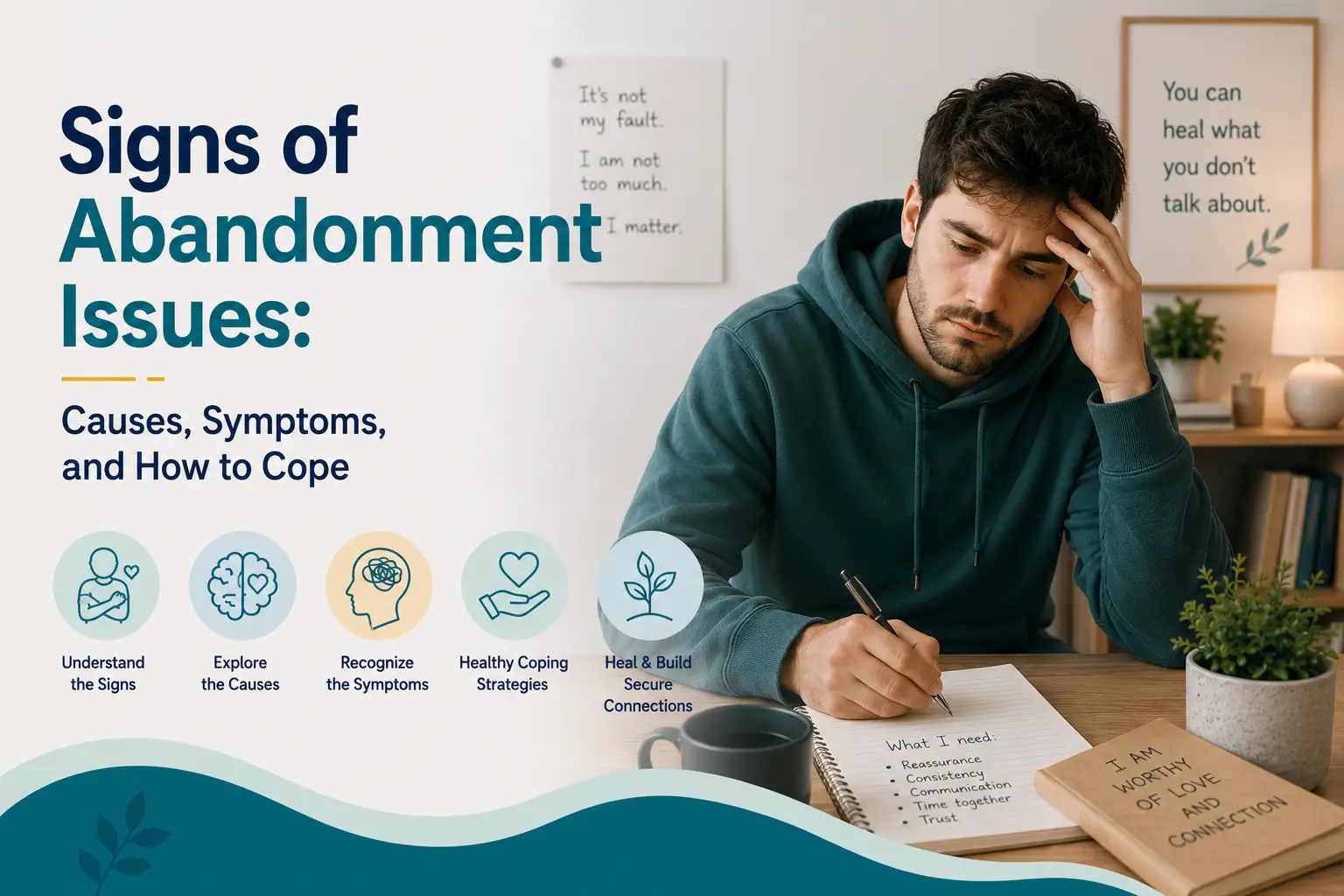
Fear of abandonment can affect how you understand yourself, respond to relationships, and manage emotional distress. Common signs of abandonment issues include persistent fear of rejection, frequent reassurance seeking, difficulty trusting others, jealousy, people-pleasing, emotional withdrawal, and difficulty tolerating time alone. These patterns can follow childhood abandonment, emotional neglect, loss, trauma, or painful adult relationship experiences. Understanding the causes and recognizing the signs can help you choose appropriate support and build healthier relationship patterns.
What are abandonment issues?
Abandonment issues are persistent fears and relationship patterns linked to perceived or actual loss, rejection, neglect, or separation. “Abandonment issues” is a common descriptive term rather than a standalone mental health diagnosis. The pattern can involve anxiety, insecurity, low self-esteem, relationship conflict, or difficulty with emotional regulation.
A person may fear that a partner, friend, parent, or other important person will leave even when current evidence does not indicate immediate rejection. Small changes, such as a delayed message or different tone, can trigger intense worry. Attachment research links attachment anxiety with fear of rejection or abandonment and a strong desire for closeness.
What are the main signs of abandonment issues?
The main signs include reassurance seeking, fear of rejection, jealousy, difficulty trusting, people-pleasing, clinginess, emotional withdrawal, and unstable relationship patterns. You may notice several signs at the same time, while another person may show only one or two.
Common signs of abandonment include:
- You need frequent reassurance that someone loves you or will stay.
- You interpret delayed replies, reduced contact, or changes in tone as rejection.
- You become jealous when a partner gives attention to other people.
- You struggle to trust a partner’s intentions even without clear evidence of betrayal.
- You feel intense distress when someone becomes unavailable.
- You avoid emotional intimacy because closeness feels unsafe.
- You move quickly between dependency and emotional distance.
- You agree to unwanted requests to prevent conflict or rejection.
- You tolerate unhealthy relationships because being alone feels more frightening.
- You repeatedly check messages, social activity, or relationship signals for reassurance.
- You experience chronic loneliness despite having supportive people around you.
These behaviors do not prove that you have a psychological disorder. A mental health professional considers the duration, severity, personal history, and effect on daily functioning before identifying a clinical condition.
What causes a fear of abandonment?
Fear of abandonment can develop from early relationship experiences, significant losses, trauma, emotional neglect, or later experiences of rejection and separation. Childhood experiences can influence attachment patterns, but adult experiences can affect attachment security as well.
Childhood abandonment may involve the death or departure of a caregiver, parental separation, inconsistent caregiving, repeated rejection, or prolonged emotional unavailability. Emotional neglect can occur when a caregiver remains physically present but does not consistently respond to a child’s emotional needs.
Adult experiences can include divorce, bereavement, betrayal, sudden relationship loss, bullying, or repeated rejection. These experiences do not automatically create abandonment issues. Personal history, existing mental health difficulties, coping patterns, and the meaning attached to the experience all matter.
How does attachment theory explain abandonment fears?
Attachment theory explains how early relationships can influence expectations about closeness, safety, trust, and separation. Adult attachment research commonly examines anxiety and avoidance dimensions. High attachment anxiety can involve fear of rejection or abandonment and a strong need for closeness, while attachment avoidance can involve discomfort with intimacy and dependence.
An anxious attachment style may appear as reassurance seeking, relationship anxiety, clinginess, or intense distress during separation. An avoidant pattern may involve emotional detachment, difficulty trusting, or reluctance to depend on another person. A fearful or disorganized pattern can involve conflicting desires for closeness and distance.
Attachment style does not permanently determine your relationships. Later experiences, current relationships, therapy, and learned coping skills can affect how you respond to closeness and conflict.
What are the emotional signs of abandonment issues?
Emotional signs include persistent insecurity, fear of rejection, jealousy, emotional instability, low self-worth, anxiety, loneliness, and difficulty feeling safe in close relationships. The intensity of these reactions can vary according to the situation and your personal history.
You may feel unlovable when someone becomes less available. You may expect rejection before a relationship problem actually occurs. You may experience strong anxiety after a disagreement and assume that the relationship is ending. Some people respond by seeking constant reassurance, while others suppress emotional needs and detach.
Emotional regulation can become difficult when an ordinary relationship event activates an earlier fear. Mindfulness, journaling, supportive relationships, and therapy can help you notice emotional reactions before acting on them.
How do abandonment issues affect relationships?
Abandonment fears can affect trust, communication, boundaries, intimacy, and conflict responses. Fear can cause you to seek constant contact, test a partner’s commitment, become controlling, avoid vulnerability, or end a relationship before another person can leave.
Codependency can appear when your sense of security depends heavily on another person’s attention, approval, or availability. Self-abandonment can appear when you repeatedly ignore your own needs to keep another person satisfied.
These patterns can create relationship anxiety because reassurance may provide short-term relief without resolving the underlying fear. Healthy relationships require communication, mutual boundaries, respect, and the ability to tolerate reasonable independence, while relationship therapy can help when these patterns become difficult to manage.
Can childhood abandonment cause abandonment issues in adults?
Yes, childhood abandonment can contribute to abandonment fears in adults, especially when early caregiving involved loss, inconsistency, rejection, or emotional neglect. Early attachment experiences can influence later expectations about relationships, but childhood history does not determine adult behavior.
Childhood abandonment trauma can affect beliefs about safety, trust, self-worth, and emotional availability. A child may learn to expect that important people leave or that emotional needs will not receive a reliable response. Adult relationships can then activate those expectations.
Not every adult with childhood loss develops abandonment issues. Protective relationships, later experiences, personal coping skills, and professional support can change how a person responds to relationship stress.
How can you identify your abandonment triggers?
You can identify abandonment triggers by recording the event, thought, emotion, body response, and behavior that follow a perceived threat of rejection. A trigger may involve a delayed reply, cancelled plan, disagreement, reduced affection, criticism, or physical separation.
Create a brief trigger record with five points:
- Event: describe exactly what happened.
- Thought: record the immediate interpretation.
- Emotion: name the strongest feeling.
- Body response: note tension, rapid heartbeat, restlessness, or other changes.
- Action: record what you did next.
This process helps separate observable facts from assumptions. A therapist can help you identify recurring patterns and develop safer responses to relationship uncertainty.
How can you cope with abandonment issues?
You can cope with abandonment issues by recognizing triggers, challenging automatic conclusions, strengthening boundaries, maintaining independent activities, and seeking appropriate mental health support. Coping works best when you address both immediate reactions and the beliefs that maintain the pattern.
When fear appears, pause before sending repeated messages, demanding reassurance, withdrawing, or ending the relationship. Ask what evidence supports your interpretation and what evidence contradicts it. Use clear communication rather than testing another person’s commitment.
Build a support system that includes friends, family, community connections, or professional support. Protect time for sleep, exercise, hobbies, work, and personal goals. Independent routines can reduce the pressure placed on one relationship.
What treatment helps abandonment issues?
Therapy can help you understand abandonment fears, process trauma, develop emotional regulation, and change relationship patterns. Treatment depends on your symptoms, history, goals, and any coexisting mental health condition.
Cognitive Behavioral Therapy (CBT) can help you identify unhelpful thoughts and practice different behavioral responses. Psychodynamic therapy can explore how earlier experiences influence current relationships. Attachment-based therapy can focus on patterns of trust, closeness, and emotional safety.
A clinician may consider other approaches when specific conditions are present. Dialectical Behavior Therapy (DBT), for example, is used for some people with borderline personality disorder and targets skills such as emotional regulation and interpersonal effectiveness.
Therapy does not require you to prove that a caregiver or former partner caused your difficulties. The goal is to understand your current pattern and develop healthier responses.
Can abandonment issues be cured?
Abandonment issues are treatable, although “cured” is not a precise clinical term for a relationship pattern. Therapy can help reduce distress, strengthen self-worth, improve emotional regulation, and support healthier relationships.
Progress involves learning to recognize fear without automatically treating fear as evidence. You can develop greater tolerance for separation, communicate needs directly, maintain boundaries, and choose relationships that support mutual respect.
If abandonment fears cause significant distress or interfere with daily life, professional assessment can identify whether anxiety, trauma-related symptoms, depression, separation anxiety, or another condition requires treatment.
How is abandonment fear different from normal relationship concern?
Normal relationship concern responds to clear information, while abandonment fear can produce intense distress from uncertainty or minor changes in contact. Feeling upset after a genuine breakup, disagreement, or period of separation does not automatically indicate abandonment issues.
The difference often involves intensity, frequency, and impact. A person may notice concern, discuss the situation, and return to normal activities. A person with persistent abandonment fears may repeatedly check messages, seek reassurance, imagine rejection, avoid closeness, or struggle to focus on work and responsibilities.
Abandonment fear can coexist with anxiety, depression, trauma symptoms, or separation anxiety, but the presence of one sign does not establish a diagnosis. A professional assessment can distinguish relationship concerns from symptoms that require treatment and can identify support.
When should you seek professional help?
Seek professional help when fear of abandonment causes persistent distress, repeated relationship problems, significant avoidance, harmful coping, or difficulty functioning at work or home. Professional support is especially important when anxiety becomes overwhelming or you feel unable to cope.
NHS guidance recommends seeking help when anxiety or fear becomes difficult to manage or self-help does not help. In England, adults can self-refer to NHS Talking Therapies for anxiety and depression without a diagnosis for eligible problems.
A qualified counsellor can help you explore childhood experiences, emotional neglect, trauma, relationship anxiety, and current coping patterns without judging you. Urise Counselling can provide a structured space to discuss relationship concerns and identify practical steps toward healthier emotional patterns.
If you have thoughts of harming yourself or feel unable to keep yourself safe, seek urgent mental health support through local emergency services or an appropriate crisis service.
Frequently Asked Questions
What are the signs of abandonment issues?
Signs of abandonment issues include fear of rejection, frequent reassurance seeking, jealousy, trust difficulties, people-pleasing, clinginess, emotional withdrawal, and intense distress during separation. These patterns become more concerning when persistent fears affect relationships, emotional wellbeing, daily functioning, or your ability to maintain healthy boundaries.
How does fear of abandonment affect relationships?
Fear of abandonment can cause reassurance seeking, jealousy, controlling behavior, avoidance of intimacy, conflict, or premature relationship endings. Anxiety may make neutral events feel threatening, while fear of rejection can encourage people-pleasing or emotional withdrawal, creating relationship patterns that reinforce insecurity.
What are the emotional signs of abandonment issues?
Emotional signs include insecurity, fear of rejection, anxiety, jealousy, loneliness, low self-esteem, emotional instability, and difficulty feeling safe with close people. Some individuals suppress emotional needs and detach, while others seek frequent reassurance because separation creates intense distress or uncertainty.
How can you tell if you have a fear of abandonment?
You may have a fear of abandonment when separation or reduced attention repeatedly triggers intense worry, reassurance seeking, jealousy, distrust, or avoidance. A mental health professional can assess your symptoms, personal history, relationships, and daily functioning to identify the underlying pattern accurately.
How can fear of abandonment be overcome?
You can overcome abandonment fears by identifying triggers, challenging unhelpful assumptions, strengthening boundaries, developing emotional regulation skills, and working with a qualified therapist. Cognitive Behavioral Therapy, attachment-focused approaches, and other evidence-based therapies can address anxiety, trauma, relationship patterns, and low self-worth.