

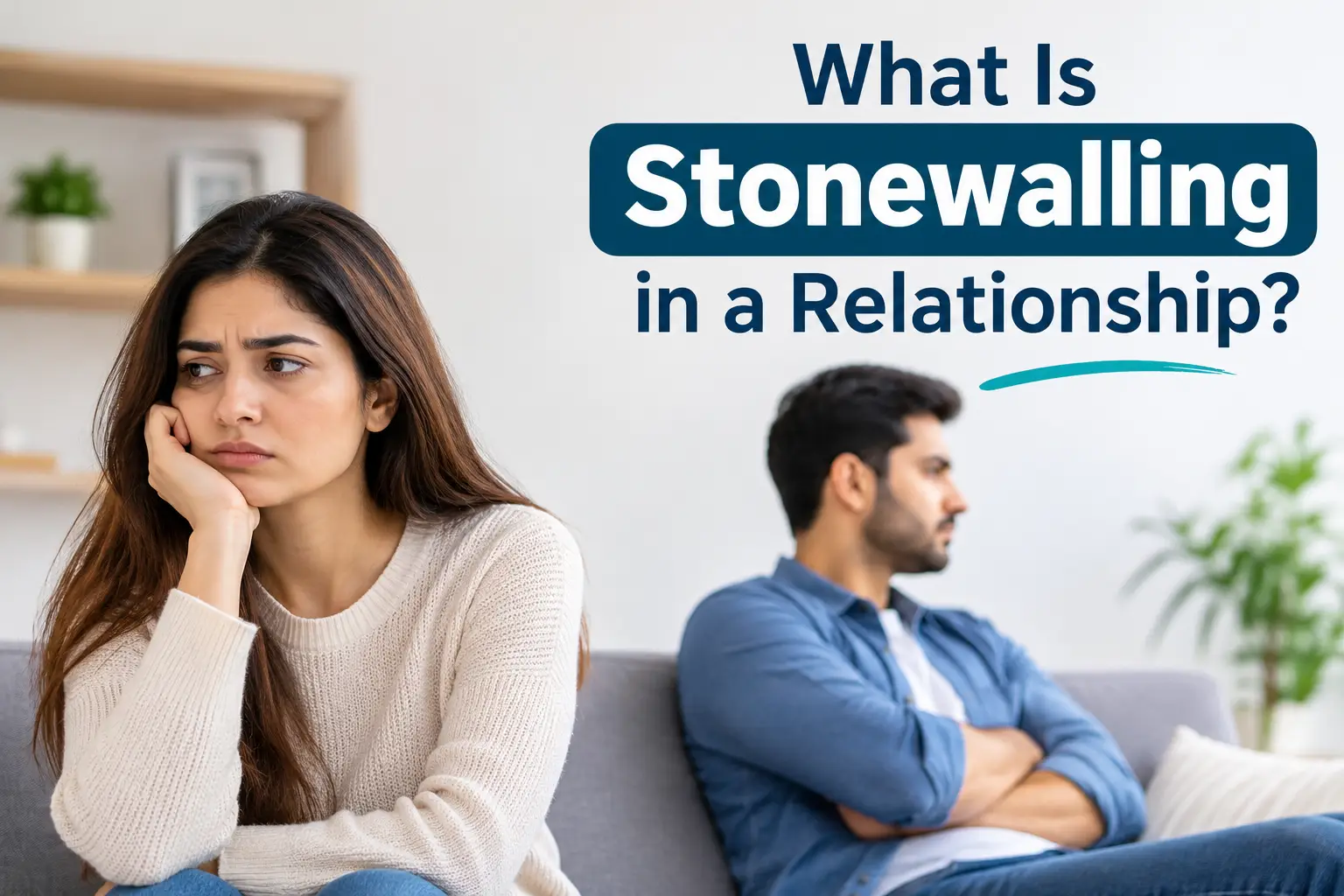
Have you ever tried to discuss a problem with your partner, only to be met with silence? Perhaps they stop answering, avoid eye contact or leave the room. You may feel confused, hurt or unsure how to continue the conversation.
This behaviour is often called stonewalling.
Stonewalling in a relationship happens when one partner withdraws from communication during a difficult conversation or disagreement. They may stop responding, shut down emotionally or refuse to discuss the problem.
Sometimes, this happens because a person feels overwhelmed and does not know how to respond. In other situations, someone may use silence to punish or control their partner.
Whatever the reason, repeated stonewalling can create emotional distance and make relationship problems harder to resolve.
In this guide, we explain what stonewalling means, why it happens, how it affects relationships and what both partners can do to improve communication.
What Is Stonewalling in a Relationship?
Stonewalling is a communication behaviour in which someone shuts down or withdraws during a conversation, especially when discussing difficult emotions or relationship problems.
Instead of listening and responding, they may become silent, avoid eye contact, give short answers or stop engaging altogether.
The term comes from the idea of a stone wall. Just as a wall blocks someone from getting through, stonewalling can make it feel impossible to reach your partner emotionally.
For example, imagine you want to talk about a disagreement that happened earlier. You try to explain how it made you feel, but your partner looks away and refuses to respond.
You ask questions, but they remain silent. Eventually, you feel as though you are talking to a wall.
This is one example of stonewalling in relationships.
Stonewalling can happen for different reasons. Some people withdraw because they feel emotionally overwhelmed. Others may avoid difficult conversations because they struggle to express their feelings. In some cases, silence is used deliberately to punish or control another person.
It is important to understand the behaviour, its purpose and its effect on both partners.
What Are the Signs of Stonewalling?
Stonewalling does not always look the same. Some people completely stop talking, while others remain physically present but emotionally disengage.
Here are some common signs to look for.
1. Giving the Silent Treatment
One common sign is refusing to speak during or after a disagreement.
Your partner may ignore your questions, avoid responding to messages or refuse to discuss what happened.
This can leave you feeling rejected and uncertain about how to resolve the problem.
2. Avoiding Eye Contact
A person who is stonewalling may avoid looking at their partner during a difficult conversation.
They might stare at the floor, look away or focus on something else.
Avoiding eye contact alone does not prove someone is stonewalling. However, when it happens alongside emotional withdrawal and a lack of response, it may be part of the pattern.
3. Giving Short or One-Word Answers
Your partner may respond with words such as:
- Fine.
- Whatever.
- Nothing.
- I don’t know.
- Do what you want.
These answers can make it difficult to understand what your partner thinks or feels.
4. Refusing to Discuss Problems
Some people avoid conversations whenever relationship issues arise.
For example, whenever you try to discuss finances, trust or household responsibilities, your partner may change the subject or refuse to engage.
As a result, important problems remain unresolved.
5. Walking Away During Difficult Conversations
Walking away without explanation can also be a sign of stonewalling.
A person may leave the room, end a phone call or stop replying when a conversation becomes uncomfortable.
However, leaving a conversation is not automatically stonewalling. Taking a clearly communicated break to calm down can be a healthy response to conflict.
6. Emotionally Withdrawing From Your Partner
Sometimes, a person stays in the same room but stops engaging emotionally.
They may appear distracted, show little reaction or seem uninterested in what their partner is saying.
This can make the other person feel lonely, even when they are physically together.
What Are Some Examples of Stonewalling?
Understanding real-life examples can make stonewalling easier to recognise.
Here are some situations where it may happen.
Example 1: Avoiding a serious conversation
One partner says, “I feel like we haven’t been spending enough time together.”
The other partner looks away and refuses to respond. When the subject comes up again, they change the topic.
Example 2: Ignoring a partner after an argument
A couple disagrees about money. After the argument, one person stops speaking to the other and ignores their attempts to communicate.
Example 3: Giving dismissive answers
One partner tries to explain why they feel hurt. The other responds with “Whatever” or “I don’t care” and refuses to continue.
Example 4: Leaving without explaining
During a disagreement, one partner suddenly walks out. They do not explain why they need a break or when they will return to the conversation.
Example 5: Staying physically present but emotionally disconnected
One partner tries to discuss a problem, but the other keeps looking at their phone and gives no meaningful responses.
These examples show how stonewalling can prevent couples from understanding each other and finding solutions.
Why Do People Stonewall in Relationships?
There is no single reason why someone stonewalls. Their behaviour may be linked to emotional stress, past experiences, communication difficulties or an attempt to control a situation.
Understanding the possible causes can help couples respond more effectively.
1. Feeling Emotionally Overwhelmed
One common reason for stonewalling is emotional overwhelm.
During an intense disagreement, a person may experience strong emotions such as anger, fear or frustration. Their heart rate may increase, their muscles may become tense and they may struggle to think clearly.
This experience is sometimes called emotional flooding.
When someone feels overwhelmed, they may shut down because they cannot process the conversation or find the right words.
They may not be trying to hurt their partner. They may simply be struggling to manage their emotions.
2. Fear of Conflict and Arguments
Some people find disagreements difficult because they associate conflict with rejection, anger or emotional pain.
They may worry that expressing their feelings will make the situation worse.
Instead of discussing the problem, they withdraw from the conversation.
This behaviour may offer temporary relief, but it can prevent couples from resolving important issues.
3. Difficulty Expressing Emotions
Not everyone finds it easy to talk about their feelings.
Some people struggle to explain when they feel hurt, disappointed, anxious or angry.
They may not have learned healthy communication skills while growing up.
When difficult emotions arise, silence may feel easier than trying to explain what is happening inside.
4. Childhood and Past Relationship Experiences
Past experiences can influence how someone handles conflict in adult relationships.
For example, a person who grew up in a home where arguments were frequent or emotions were ignored may have learned to stay quiet during disagreements.
Someone who experienced criticism or rejection in a previous relationship may also find emotional conversations difficult.
These experiences do not automatically cause stonewalling, but they may influence communication habits.
5. Anxiety, Stress and Emotional Burnout
Daily stress can affect how people communicate with their partners.
Someone dealing with anxiety, work pressure, family responsibilities or emotional exhaustion may have less capacity to manage difficult conversations.
They may become quiet or withdraw when they feel unable to handle another stressful situation.
If this happens regularly, it can create communication problems that need attention.
6. Avoidant Attachment Patterns
Attachment styles can influence how people respond to emotional closeness and conflict.
People with avoidant attachment tendencies may feel uncomfortable when conversations become emotionally intense.
They may prefer independence, struggle with vulnerability or withdraw when their partner asks for emotional reassurance.
However, attachment styles do not determine how someone will behave. People with different attachment patterns can all experience communication difficulties.
7. Using Silence to Punish or Control a Partner
Not all stonewalling happens because someone feels overwhelmed.
In some situations, a person may deliberately stop communicating to punish their partner, create guilt or gain control.
For example, someone may refuse to speak until their partner apologises or agrees with them.
When silence becomes a repeated way to intimidate, punish or control someone, it can be part of an emotionally harmful relationship pattern.
How Does Stonewalling Affect a Relationship?
Healthy relationships need communication, trust and emotional understanding.
When one partner repeatedly withdraws from difficult conversations, both people may begin to feel disconnected.
Here are some ways stonewalling can affect a relationship.
1. Creates Emotional Distance
When someone repeatedly refuses to communicate, their partner may feel emotionally alone.
They may stop sharing their thoughts because they expect to be ignored.
Over time, this can reduce closeness and make the relationship feel less supportive.
2. Damages Trust and Communication
Trust develops when partners feel that they can discuss problems honestly.
Stonewalling can make this difficult.
If one person regularly shuts down, the other may begin to doubt whether their concerns will ever be taken seriously.
This can make future conversations even harder.
3. Causes Frustration and Resentment
Being ignored during an important conversation can feel painful.
The person trying to communicate may become frustrated, angry or resentful.
The person withdrawing may also feel pressured or misunderstood.
Without healthy communication, these emotions can build over time.
4. Reduces Emotional Intimacy
Emotional intimacy develops when partners share their thoughts, feelings and experiences.
Stonewalling creates barriers to this connection.
When couples stop discussing their feelings, they may gradually become less comfortable with emotional closeness.
5. Creates a Repeated Conflict Cycle
Stonewalling can create a pattern in which one partner keeps trying to communicate while the other keeps withdrawing.
For example:
- One partner raises a concern.
- The other partner becomes quiet.
- The first partner pushes harder for an answer.
- The second partner withdraws further.
- Both partners become frustrated.
This pattern can repeat during different disagreements.
If couples do not recognise it, the cycle may become harder to break.
What Is the Difference Between Stonewalling and the Silent Treatment?
Stonewalling and the silent treatment are closely related terms. Both involve a lack of communication, but they are not always the same.
Stonewalling generally describes withdrawing from a conversation or emotionally shutting down. A person may become overwhelmed and struggle to respond.
The silent treatment usually refers to deliberately ignoring someone or refusing to communicate with them. It may be used to express anger, punish a partner or influence their behaviour.
For example, someone who feels overwhelmed during an argument may become silent because they cannot process their emotions.
On the other hand, someone giving the silent treatment may intentionally ignore their partner to make them feel guilty.
The terms are sometimes used interchangeably in everyday relationship discussions. The important things to consider are the person’s behaviour, the situation, their intention and the effect on the relationship.
What Is the Difference Between Stonewalling and Taking Space?
Taking space during an argument can be healthy. Sometimes, people need time to calm down before they can discuss a problem properly.
However, taking a break is different from repeatedly shutting someone out.
Healthy space:
- You explain that you need a break.
- You tell your partner why you need time.
- You agree when you will continue the conversation.
- You use the break to calm down.
- You return and discuss the problem.
Stonewalling:
- You stop responding without explanation.
- You refuse to discuss the problem.
- You leave your partner unsure when communication will resume.
- You repeatedly avoid difficult conversations.
- You do not return to resolve the issue.
For example, saying, “I feel overwhelmed right now. Can we take a short break and talk again in an hour?” gives your partner reassurance.
The most important part is following through and returning to the conversation.
Is Stonewalling a Form of Emotional Abuse?
Stonewalling can sometimes be part of emotional abuse, but not every instance of withdrawal is abusive.
A person may shut down because they feel anxious, overwhelmed or unable to express their emotions.
However, repeated silence can become emotionally harmful when someone deliberately uses it to punish, intimidate or control their partner.
For example, a partner may:
- Ignore you until you apologise.
- Refuse to communicate unless you agree with them.
- Use silence to make you feel guilty.
- Withdraw affection to control your behaviour.
- Repeatedly ignore your concerns to avoid accountability.
These behaviours may be part of a wider pattern of emotional abuse or controlling behaviour.
It is important to look at the overall relationship, not just one disagreement.
If you feel frightened, controlled or unsafe, consider speaking to someone you trust or seeking professional support. You do not have to accept repeated emotional harm as a normal part of a relationship.
How Do You Deal With Stonewalling in a Relationship?
Dealing with stonewalling can be difficult, especially when you want to resolve a problem but your partner refuses to communicate.
The best approach depends on whether you are experiencing stonewalling or recognising it in your own behaviour.
If Your Partner Is Stonewalling You
If your partner shuts down during difficult conversations, consider these steps.
1. Stay Calm
It is natural to feel frustrated when someone refuses to respond.
However, raising your voice or repeatedly demanding an answer may increase tension.
Try to keep your tone calm and give the conversation some space.
2. Explain How Their Behaviour Affects You
Choose a calm moment to explain how their silence makes you feel.
For example, you could say:
“When you stop responding during difficult conversations, I feel ignored. I want us to understand each other rather than argue.”
Focus on your feelings instead of blaming your partner.
3. Give Them Reasonable Space
If your partner feels overwhelmed, they may need time to calm down.
Allowing a break can make it easier for both of you to think clearly.
However, giving space does not mean ignoring the problem forever.
4. Agree on a Time to Talk Again
Ask your partner when they feel ready to continue the discussion.
You might agree to return to the conversation later that day or the following day.
A clear agreement can help prevent an ordinary break from turning into prolonged silence.
5. Set Healthy Boundaries
You can respect your partner’s need for space while also explaining what you need from the relationship.
For example:
“I understand that you sometimes need time to think. I am happy to give you that time, but I also need us to come back and discuss important issues.”
Healthy boundaries help protect your emotional well-being.
If You Are the One Stonewalling
Recognising your own behaviour is an important first step.
If you often shut down during disagreements, these strategies may help.
1. Recognise When You Are Shutting Down
Notice what happens when a conversation becomes difficult.
Do you feel angry, anxious, overwhelmed or unable to find the right words?
Understanding your emotional triggers can help you respond differently.
2. Explain When You Feel Overwhelmed
Instead of suddenly becoming silent, tell your partner what is happening.
For example:
“I want to talk about this, but I am feeling overwhelmed. I need some time to calm down.”
This helps your partner understand that you are not simply ignoring them.
3. Ask for a Planned Break
If you need time, agree on when you will continue the conversation.
A break should give both people time to settle their emotions, not become a way to avoid the problem.
4. Return to the Conversation
Following through is essential.
If you promise to discuss the issue later, make an effort to return at the agreed time.
This helps rebuild trust and shows your partner that their concerns matter.
5. Practise Expressing Your Feelings
Start with simple statements such as:
- “I feel upset about what happened.”
- “I need time to understand my feelings.”
- “I am finding this conversation difficult.”
- “I want to understand your point of view.”
You do not need to explain everything perfectly. Making an effort to communicate is a positive step.
How Can Couples Prevent Stonewalling?
Preventing stonewalling starts with building healthier communication habits.
Both partners need to feel that they can express themselves without being attacked, ignored or dismissed.
Here are some ways couples can improve communication.
Practise Active Listening
Give your partner time to explain their thoughts without interrupting.
Try to understand what they are saying instead of immediately preparing your response.
Use Calm and Respectful Language
Avoid insults, criticism and blaming statements.
Instead of saying, “You never listen to me,” try saying, “I feel unheard when I cannot finish explaining my concerns.”
Discuss Problems Before Resentment Builds
Small disagreements can become bigger problems when couples avoid discussing them.
Make time to talk about concerns before they create ongoing frustration.
Recognise Emotional Overwhelm
Pay attention to signs that either partner needs a break.
These may include a racing heartbeat, muscle tension, frustration or difficulty thinking clearly.
Taking a planned break can help prevent conversations from becoming more intense.
Make Time for Honest Conversations
Not every conversation needs to be about a problem.
Talk about your day, share experiences and ask how your partner is feeling.
Regular communication can help strengthen emotional connection.
Respect Each Other’s Feelings and Boundaries
Both partners should feel comfortable expressing their needs.
Respecting someone’s need for space is important, but so is respecting their need for communication and emotional support.
Can Counselling Help With Stonewalling?
Yes. Counselling can help individuals and couples understand the communication patterns that contribute to stonewalling.
When stonewalling becomes a repeated problem, it may be difficult for partners to change the pattern on their own.
Couples counselling provides a supportive space where both people can discuss their concerns, understand each other’s perspectives and practise healthier ways to handle disagreements.
Counselling may help couples:
- Recognise repeated communication patterns.
- Understand emotional triggers.
- Express feelings more clearly.
- Listen to each other without becoming defensive.
- Manage disagreements more constructively.
- Rebuild trust and emotional connection.
- Develop healthier ways to resolve conflict.
Individual counselling may also help someone who struggles with anxiety, past experiences or expressing difficult emotions.
How Urise Counselling Can Support You
At Urise Counselling, we understand that relationship challenges can affect emotional well-being and everyday life.
If communication problems are creating distance between you and your partner, professional support may help you understand what is happening and explore healthier ways forward.
Our counselling services include Couple Counselling, Anxiety Therapy, Trauma Therapy and Depression Counselling.
You do not have to wait until relationship problems become overwhelming before seeking support.
Taking the first step towards better communication can help you build a healthier and more supportive relationship.
Frequently Asked Questions About Stonewalling
What Is the Main Cause of Stonewalling?
There is no single cause of stonewalling. It may happen because someone feels emotionally overwhelmed, fears conflict, struggles to express feelings or wants to avoid a difficult conversation. In some situations, silence may also be used to punish or control a partner.
Is Stonewalling a Form of Manipulation?
Not always. Some people withdraw because they feel overwhelmed and cannot respond. However, deliberately using silence to punish, control or make a partner feel guilty can be manipulative.
Is Stonewalling the Same as Ignoring Someone?
They are related but not always identical. Stonewalling involves withdrawing from communication, often during conflict. Ignoring someone can happen in different situations and may not always involve emotional shutdown.
How Long Does Stonewalling Usually Last?
There is no fixed length. Some people withdraw for a few minutes, while others may avoid communication for hours or days. The important difference is whether someone communicates their need for space and makes an effort to return to the conversation.
Can Stonewalling Ruin a Relationship?
Repeated stonewalling can seriously damage a relationship. It may create emotional distance, reduce trust and leave important problems unresolved. However, couples may improve their communication when both partners recognise the pattern and work towards change.
Can a Relationship Recover From Stonewalling?
Yes, some relationships can recover from stonewalling. Both partners need to understand the behaviour, communicate their needs and develop healthier ways to handle conflict. Counselling may also provide useful support.
Should You Ignore Someone Who Is Stonewalling You?
Ignoring them in return may increase emotional distance. Instead, try to communicate calmly, give reasonable space and agree on a time to talk again. If the behaviour continues, consider setting boundaries and seeking support.
Can Therapy Help Stop Stonewalling?
Therapy can help people understand why they withdraw during difficult conversations and develop better communication skills. Couples counselling may also help partners recognise unhealthy patterns and work towards more respectful discussions.
Final Thoughts on Stonewalling in Relationships
Stonewalling can make it difficult for couples to communicate, understand each other and resolve disagreements.
It may happen because someone feels overwhelmed, struggles to express emotions or wants to avoid conflict. In other situations, silence may be used to punish or control a partner.
Understanding the reason behind the behaviour is an important step towards change. Both partners need to recognise how their actions affect the relationship and make an effort to communicate more openly.
Taking a break during an argument can be healthy when both people agree to return to the conversation. However, repeatedly shutting someone out can create emotional distance and damage trust.
If stonewalling is affecting your relationship, counselling may help you explore the underlying issues and develop healthier communication habits.
Urise Counselling offers support for individuals and couples who want to understand their emotional challenges and build stronger relationships. Reaching out for support can be a positive first step towards change.