

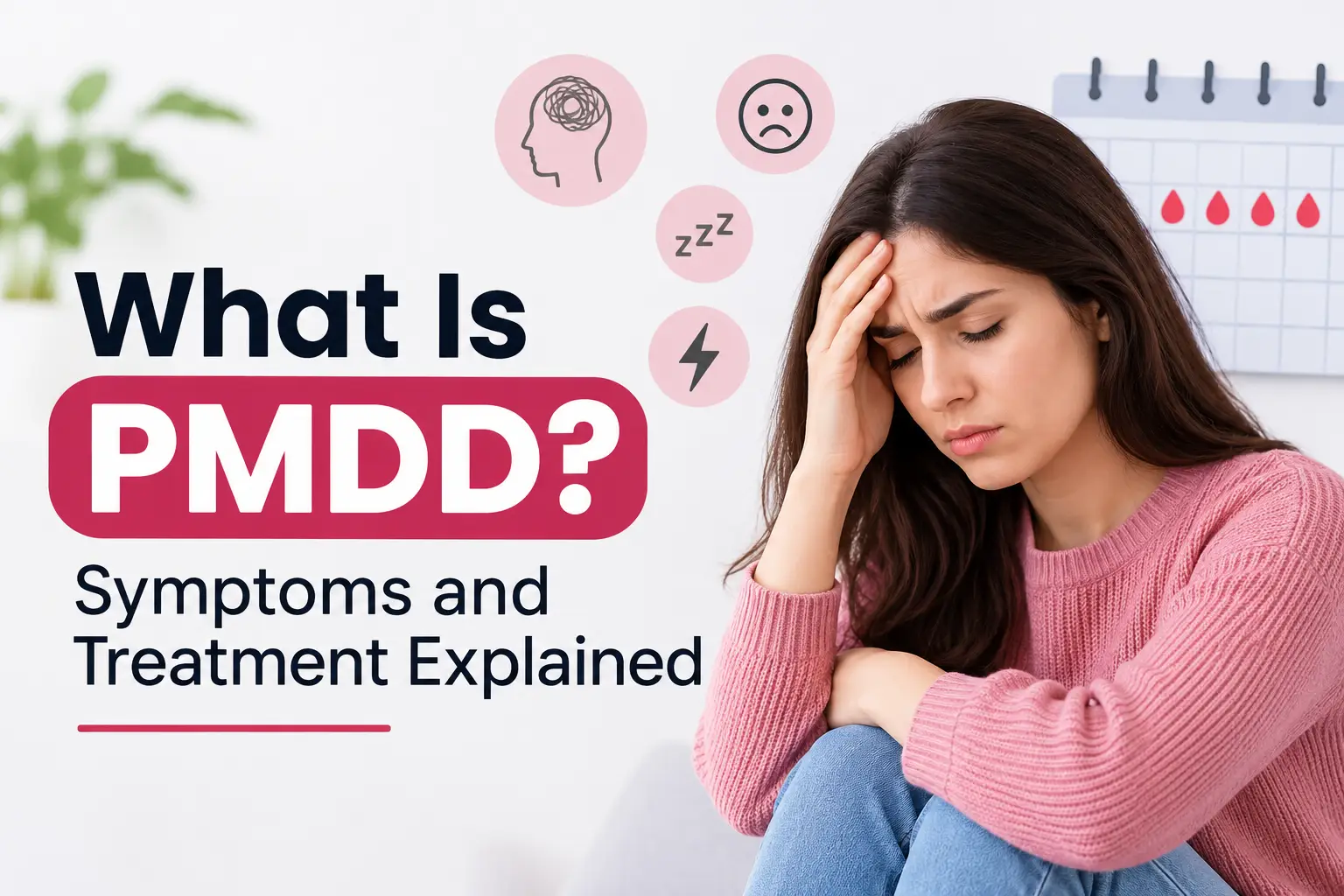
Premenstrual Dysphoric Disorder (PMDD) can affect your mood, body and daily life. It often starts before your period. You may feel sad, anxious, angry or very tired. These feelings can be hard to manage.
PMDD is more severe than normal PMS. It can affect your work, family life and close relationships.
The good news is that support and treatment are available. You do not have to face these feelings alone.
In this guide, we explain what PMDD means, its symptoms and why it can cause exhaustion. We also explore treatment options and where to find help in the UK.
What Does PMDD Mean?
PMDD stands for Premenstrual Dysphoric Disorder.
It is a condition linked to the menstrual cycle. It can cause strong emotional and physical symptoms before a period.
Symptoms often start one or two weeks before a period. They usually improve a few days after the period begins.
People with PMDD may be more sensitive to normal hormone changes. These changes can affect their mood and well-being.
PMDD is not a sign of weakness. It is a real health condition that needs care and support.
What Are the Common Symptoms of PMDD?
PMDD can cause both emotional and physical symptoms. These symptoms can be different for each person.
Emotional and Mental Symptoms
Common emotional symptoms include:
- Feeling sad or depressed.
- Sudden mood changes.
- Feeling anxious or worried.
- Getting angry easily.
- Feeling hopeless.
- Crying more than usual.
- Losing interest in daily activities.
- Finding it hard to focus.
- Feeling out of control.
These feelings can affect your confidence and relationships.
Physical Symptoms
PMDD can also affect your body.
Common physical symptoms include:
- Breast pain or tenderness.
- Headaches.
- Bloating.
- Muscle and joint pain.
- Changes in appetite.
- Trouble sleeping.
- Feeling very tired.
- Low energy.
These symptoms can make everyday tasks harder.
PMDD Exhaustion: Why Does It Make You Feel So Tired?
PMDD exhaustion is more than feeling a little tired. It can leave you feeling drained and low on energy.
You may wake up tired, even after a full night’s sleep. You may also find it hard to focus or finish simple tasks.
There are several reasons why PMDD may cause exhaustion.
1. Poor Sleep
PMDD can affect your sleep. You may find it hard to fall asleep or stay asleep.
Poor sleep can leave you tired the next day.
2. Emotional Stress
Strong emotions can take a lot of energy. Feeling sad, angry or anxious for several days can leave you mentally drained.
3. Physical Pain
Headaches, muscle pain and bloating can make it hard to relax. These problems may also affect your sleep.
4. Changes in Daily Habits
You may find it harder to exercise, cook or follow your normal routine. This can affect your energy levels.
How Can You Manage PMDD Exhaustion?
Small changes may help you manage low energy.
You can try to:
- Follow a regular sleep routine.
- Eat balanced meals.
- Drink enough water.
- Take short walks if you feel able.
- Give yourself time to rest.
- Reduce stress where possible.
- Track your energy each month.
If your tiredness is severe or continues beyond your usual PMDD symptoms, speak to your GP.
What Is the Difference Between PMS and PMDD?
PMS and PMDD are both linked to the menstrual cycle. They can cause mood changes and physical discomfort.
However, PMDD is more severe.
| PMS | PMDD |
| May cause mild mood changes. | Can cause severe mood changes. |
| May cause some tiredness. | Can cause strong exhaustion. |
| Symptoms may be easier to manage. | Symptoms can affect daily life. |
| May cause mild anxiety. | Can cause severe anxiety or low mood. |
| May affect daily tasks. | Can make daily tasks very hard. |
If your symptoms are severe or affect your daily life, speak to your GP.
What Causes PMDD?
The exact cause of PMDD is not fully known.
However, experts believe it may be linked to how the body reacts to normal hormone changes.
Hormone levels change during the menstrual cycle. These include oestrogen and progesterone.
Some people may be more sensitive to these changes. This may affect brain chemicals that help control mood.
Stress and poor sleep may also make some symptoms harder to manage.
PMDD is not your fault. You have not caused it by doing something wrong.
How Is PMDD Diagnosed?
There is no single blood test that can confirm PMDD.
A GP will ask about your symptoms and menstrual cycle. They may also ask how these symptoms affect your daily life.
Keeping a symptom diary can help.
Try to record your symptoms for at least two menstrual cycles.
Write down:
- When your symptoms start.
- How long they last.
- How you feel each day.
- Changes in your sleep.
- Any physical pain.
- The date your period starts.
- How symptoms affect your daily life.
This record can help your GP understand the pattern.
How Is PMDD Treated?
If you are wondering how is PMDD treated, there are several options.
Treatment depends on your symptoms and health needs. Your GP can help you find the right approach.
1. Antidepressants
A GP may suggest antidepressants to help manage emotional symptoms.
One common type is called a selective serotonin reuptake inhibitor (SSRI).
These medicines may help with low mood, anxiety and irritability.
Your doctor will explain which option may suit you.
2. Hormonal Treatment
Hormonal treatment may help some people with PMDD.
A GP may discuss the combined contraceptive pill or other hormone-based options.
These treatments aim to manage hormone changes during the cycle. They do not work for everyone.
Always discuss the benefits and risks with your GP.
3. Cognitive Behavioural Therapy (CBT)
Cognitive Behavioural Therapy (CBT) is a type of talking therapy.
It helps you understand how your thoughts, feelings and actions are linked.
CBT may help you:
- Manage anxious thoughts.
- Understand mood changes.
- Build healthy coping skills.
- Deal with stress.
- Improve your daily routine.
- Feel more confident.
CBT does not treat the hormonal cause of PMDD. However, it may help you manage its emotional impact.
4. Lifestyle Changes
Daily habits may also support your well-being.
You can try to:
- Get enough sleep.
- Eat balanced meals.
- Exercise if you feel able.
- Reduce stress.
- Limit alcohol.
- Try relaxation exercises.
These steps may help ease some symptoms. However, they may not be enough for severe PMDD.
How Can Counselling Help People Living With PMDD?
Living with PMDD can feel difficult. You may struggle with strong emotions, low confidence or relationship problems.
Counselling can give you a safe space to talk about these feelings.
A counsellor can listen without judgement. They may also help you understand your emotional needs.
Counselling may help you:
- Understand your emotions.
- Manage stress and anxiety.
- Build healthy coping skills.
- Improve your relationships.
- Develop self-confidence.
Counselling is not a cure for PMDD. It should not replace medical care. However, it may form part of a wider support plan.
How Urise Counselling Can Support Your Well-Being
At Urise Counselling, we understand that emotional challenges can affect many parts of life.
Our services include:
- Anxiety Therapy
- Depression Counselling
- Couple Counselling
- Family Therapy
- Trauma Therapy
- Bereavement Counselling
- Premarital Marriage Counselling
These services may help if you are also dealing with anxiety, low mood or relationship difficulties.
Talking to a counsellor can help you explore your feelings. It can also help you find healthy ways to cope with daily challenges.
Where Can You Find a PMDD Helpline and Support in the UK?
Finding the right support can make a real difference.
If you think you have PMDD, speak to your GP. They can discuss your symptoms and explain the next steps.
You can also contact these support services.
NHS
The NHS provides information about PMDD symptoms, diagnosis and treatment.
Website: https://www.nhs.uk/conditions/pmdd-premenstrual-dysphoric-disorder/
Mind
Mind offers mental health information and support.
Website: https://www.mind.org.uk/
Rethink Mental Illness
Rethink provides information about mental health conditions and support options.
Website: https://www.rethink.org/
Samaritans
Samaritans offers free emotional support at any time of day or night.
Website: https://www.samaritans.org/
There is no single national NHS helpline just for PMDD.
If you need urgent mental health help in England, call NHS 111 and select the mental health option.
If you cannot keep yourself safe, call 999 or go to A&E.
When Should You Seek Professional Help?
Speak to your GP if your symptoms affect your daily life.
You may need professional support if:
- You feel very anxious before your period.
- You have severe mood changes.
- You struggle with daily tasks.
- Your relationships are affected.
- You feel tired most of the time.
- You often feel hopeless or depressed.
Getting help early can make it easier to understand your symptoms and find the right care.
Frequently Asked Questions About PMDD
1. What Does PMDD Stand For?
PMDD stands for Premenstrual Dysphoric Disorder. It causes severe emotional and physical symptoms before a period.
2. Why Does PMDD Make You So Tired?
PMDD may affect your sleep, mood and energy. Emotional stress and physical pain can also make you feel exhausted.
3. Is PMDD a Mental Health Condition?
PMDD is a menstrual-related health condition. It causes strong emotional and physical symptoms and can affect mental well-being.
4. Can PMDD Be Treated?
Yes. Treatment options include antidepressants, hormonal treatments and talking therapies such as CBT.
5. Can Counselling Help With PMDD?
Yes. Counselling may help you manage stress, understand your emotions and build healthy coping skills. It can support medical treatment but does not replace it.
6. Where Can I Get Help for PMDD in the UK?
You can start by speaking to your GP. You can also visit the NHS, Mind and Rethink Mental Illness websites for information and support.
Final Thoughts
PMDD can affect your mood, energy and daily life. It can make the days before your period feel very hard.
But you do not have to face it alone.
Learning about PMDD is a good first step. Keeping a symptom diary can help you understand your cycle. Speaking to your GP can also help you find the right treatment.
Counselling may offer extra support with stress, anxiety and difficult emotions.
Remember, asking for help is not a weakness. With the right care and support, you can learn to manage PMDD and improve your quality of life.
Need emotional support? Urise Counselling offers services such as Anxiety Therapy, Depression Counselling and Couple Counselling. Get in touch to learn more about the support available and take a positive step towards your well-being.