
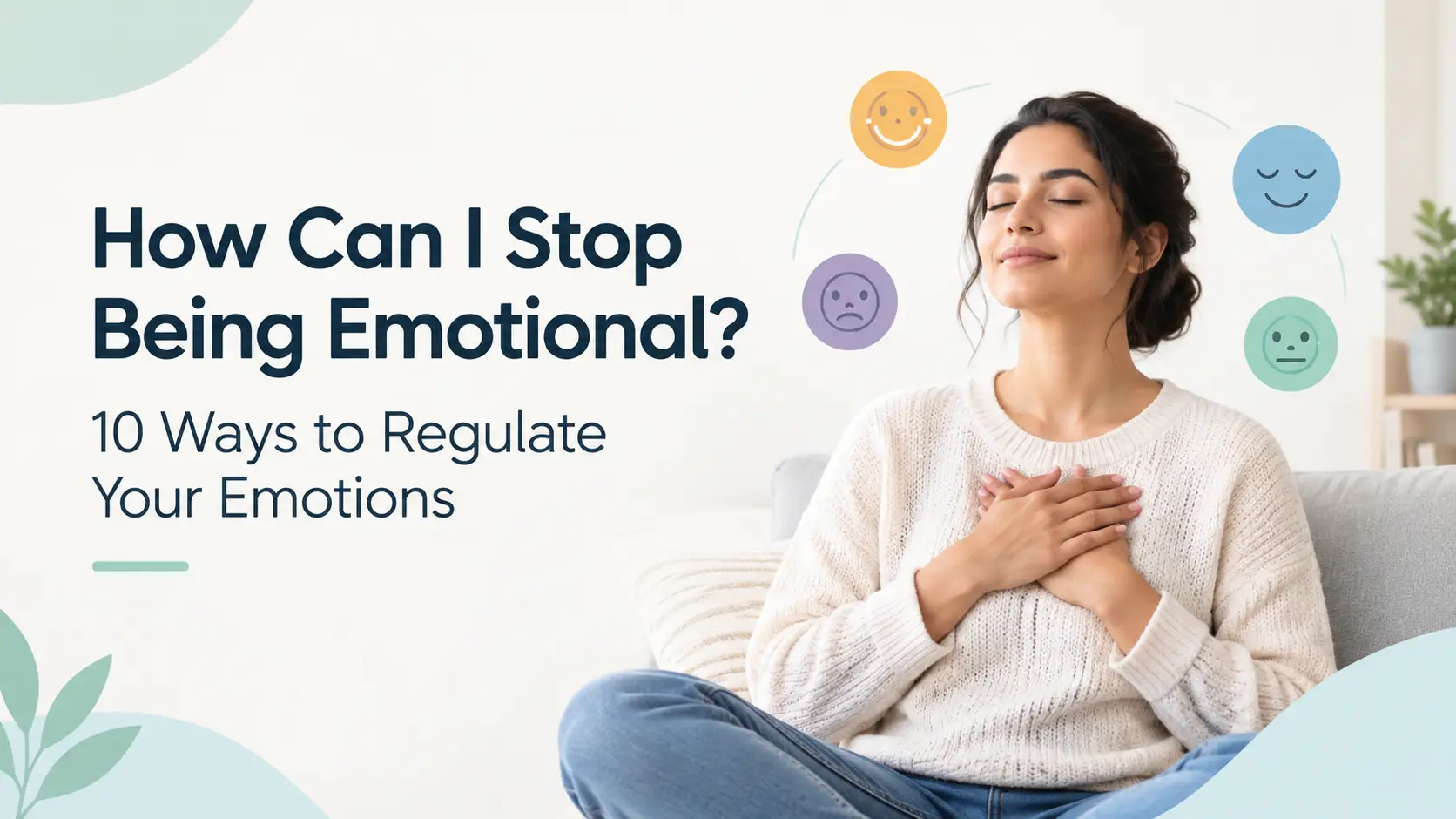
Feeling emotions strongly does not mean something is wrong with you. You cannot stop having emotions, but you can learn to regulate how you experience, interpret, and express them. Emotional regulation helps you pause before reacting, understand triggers, choose healthier coping skills, and communicate with greater control. If you often ask, “how can I stop being emotionally sensitive?”, the practical goal is not emotional numbness. The goal is emotional balance.
Urise Counselling can help you understand persistent emotional difficulties, identify patterns, and develop practical self-regulation skills. The following 10 strategies can help you manage intense emotions while keeping emotional awareness and healthy expression intact. The key distinction is between feeling an emotion and acting on an emotion. Emotional control means choosing behavior deliberately, even when the underlying feeling remains strong and uncomfortable under pressure.
What Does Emotional Regulation Mean?
Emotional regulation means managing your emotional responses without suppressing or denying your feelings. You still experience anger, sadness, fear, excitement, disappointment, or joy, but you gain greater control over what you do after an emotion appears.
Emotional regulation involves emotional awareness, self-regulation, cognitive reappraisal, and appropriate expression. Emotional awareness helps you identify what you feel. Self-regulation helps you control impulsive responses. Cognitive reappraisal helps you reconsider an interpretation that may intensify distress.
Healthy regulation does not require you to hide tears, eliminate anger, or remain calm in every situation. Strong emotions can provide useful information about your needs, boundaries, relationships, and stress levels.
Why Is Emotional Regulation Important?
Emotional regulation is important because your response to an emotion can affect decisions, relationships, work, sleep, and mental health. A strong feeling can narrow your attention and encourage an immediate reaction, while a regulated response gives you time to assess the situation.
Poor regulation can appear as frequent arguments, impulsive messages, withdrawal, repeated crying, verbal outbursts, difficulty concentrating, or unhealthy coping. Stress can make regulation harder, especially when you have poor sleep, ongoing conflict, excessive demands, or limited social support.
Emotional intelligence supports regulation by helping you recognize emotions in yourself and respond appropriately to emotions in other people. The objective is not to become less human or less caring. The objective is to make deliberate choices while emotions are present.
10 Ways to Regulate Your Emotions
1. Pause Before You React
A short pause can prevent an emotional reaction from becoming an impulsive action. Stop speaking, texting, posting, or making a decision when an emotion reaches a level that makes clear thinking difficult.
Create a simple pause routine: stop, take one slow breath, notice your body, and decide what action fits the situation. A pause does not deny your feelings. A pause creates time between the emotional trigger and your response.
Use this strategy during arguments, criticism, relationship conflict, disappointing messages, or stressful work conversations. Tell another person that you need a few minutes before continuing when immediate discussion is likely to produce a harmful response.
2. Name the Emotion Precisely
Naming an emotion improves emotional awareness because a specific label gives you clearer information about your internal state. Instead of saying “I feel bad,” identify whether you feel rejected, disappointed, embarrassed, anxious, angry, lonely, guilty, or overwhelmed.
Then identify the trigger and the action urge. For example, you might notice, “I feel rejected because the message was ignored, and I want to send an angry reply.” This distinction separates the feeling from the behavior.
Precise emotional language can reveal patterns. Repeated anger may sometimes involve hurt or fear, while repeated irritation may signal exhaustion or unresolved stress.
3. Check the Facts
Check what you know before treating an emotional interpretation as a fact. Emotions are real experiences, but the explanation attached to an emotion can contain assumptions.
Ask three questions:
- What happened that I can directly observe?
- What am I assuming about the situation?
- What other explanation fits the available facts?
This process supports cognitive reappraisal. For example, a delayed reply may trigger thoughts of rejection, but a delayed reply does not establish the reason for the delay. Separating evidence from interpretation can reduce unnecessary escalation and support better decision making.
4. Accept Your Emotions
Accepting an emotion means acknowledging the feeling without judging yourself or immediately trying to eliminate the feeling. Acceptance reduces the need to fight an internal experience and makes healthier responses easier to choose.
Try a direct statement such as, “I feel angry, and I can decide what to do with this anger.” Avoid statements such as “I should not feel this way” or “I am too sensitive.” Self-criticism can add shame to the original emotion.
Acceptance does not mean accepting harmful behavior. You can accept anger while refusing to insult someone. You can accept sadness while continuing necessary responsibilities. You can accept fear while choosing a measured response.
5. Use Deep Breathing
Deep breathing can help you slow your response when intense emotion creates physical tension or urgency. Breathe slowly through your diaphragm, allow the abdomen to expand, and make the exhale comfortable and unhurried.
Try several slow breaths while keeping attention on the movement of your breathing. The purpose is not to force the emotion away. The purpose is to create enough physical and mental space for a deliberate response.
Deep breathing works well as an immediate emotional regulation technique because you can use the method privately at work, during a difficult conversation, or before responding to a stressful message.
6. Create Healthy Distance
Stepping away from an emotionally intense situation can help you regain enough control to respond constructively. Physical distance can mean leaving a room, taking a short walk, or postponing a difficult conversation. Mental distance can involve shifting attention briefly to a neutral task.
Healthy distraction should be temporary rather than permanent avoidance. Return to the underlying issue after your emotional intensity decreases. Avoid using withdrawal to punish another person or escape every uncomfortable feeling.
A useful statement is, “I want to discuss this, but I need some time to calm down first.” Clear communication protects both your emotional needs and the relationship.
7. Keep a Mood Journal
Mood journaling helps you identify triggers, recurring thoughts, emotional patterns, and responses that make situations better or worse. Record the situation, emotion, intensity, thought, action, and outcome.
A short daily entry can reveal connections between emotional sensitivity and factors such as conflict, workload, poor sleep, isolation, or repeated negative thoughts. You can then identify coping skills that work in specific situations.
Do not use journaling only to record distress. Record successful responses too. Reviewing effective choices helps you develop self-regulation through repeated practice.
8. Practice Mindfulness
Mindfulness helps you notice thoughts, feelings, and physical sensations without immediately reacting to them. A simple mindfulness practice involves sitting quietly, focusing on your breathing, noticing emotional or physical changes, and returning attention to the present whenever your mind wanders.
Meditation can support this skill, but mindfulness can occur during ordinary activities. You can pause while walking, eating, or talking and notice your current thoughts and body sensations.
Regular practice can strengthen emotional awareness and make it easier to recognize emotional escalation earlier. Yoga, structured breathing exercises, and other attention-based practices can complement meditation when these activities suit your preferences.
9. Reduce the Stress That Makes Emotions Harder to Manage
Stress management can make emotional regulation easier because prolonged stress can reduce your ability to respond calmly to difficult situations. Focus on practical factors within your control, including sleep, physical activity, workload, social support, relaxation, and recovery time.
Exercise can support mood and stress management. Consistent sleep supports attention and emotional control. Social support can provide perspective and practical help. Healthy routines do not remove difficult emotions, but they can strengthen your capacity to cope with them.
Avoid relying on alcohol, smoking, or other unhealthy behaviors as emotional coping strategies. Short-term relief can create additional problems and does not address the source of emotional distress.
10. Consider Professional Support
Therapy can help when intense emotions remain difficult to manage despite consistent self-help efforts. A mental health professional can assess your emotional patterns, explore possible triggers, and teach structured coping strategies.
Cognitive Behavioral Therapy (CBT) can help you examine unhelpful thoughts and develop more balanced responses. Therapy can be particularly useful when emotional difficulties interfere with relationships, work, sleep, daily functioning, or self-care.
Persistent emotional dysregulation can occur alongside anxiety, depression, trauma-related difficulties, or other mental health concerns. Only a qualified professional can determine whether a specific condition explains your symptoms.
How Can I Stop Being Emotionally Sensitive?
You do not need to eliminate sensitivity; you need to improve your ability to respond to emotional triggers without losing control. Start by identifying what situations affect you most, then track the thoughts and physical sensations that appear before your strongest reactions.
Sensitivity can become harder to manage when stress, exhaustion, unresolved conflict, or repeated negative experiences accumulate. Emotional awareness helps you identify these factors instead of blaming your personality.
If criticism, rejection, conflict, or other situations repeatedly cause severe distress, therapy can help you develop stronger coping skills, communication strategies, boundaries, and self-compassion.
How to Control Your Emotions in Difficult Situations
To control your emotions in difficult situations, pause, identify the feeling, regulate your breathing, check the facts, and choose a response that matches your goals. Do not make important decisions during peak emotional intensity when you can safely delay the decision.
Use a short sequence:
- Stop the immediate reaction.
- Name the emotion.
- Identify the trigger.
- Separate facts from assumptions.
- Choose the next useful action.
This sequence supports self-regulation without requiring emotion suppression.
When Should You Seek Help?
Seek professional support when emotional reactions repeatedly disrupt your relationships, responsibilities, safety, or daily functioning. Professional help is especially important when intense distress involves self-harm urges, suicidal thoughts, severe mood changes, or an inability to maintain basic daily activities.
If you are in immediate danger or may harm yourself, contact local emergency services or reach a trusted person who can stay with you and help you access urgent mental health care.
Emotional regulation is a skill that develops through awareness, practice, healthy routines, and appropriate support. You do not need to become emotionless to become more emotionally controlled. You need practical strategies that help you experience feelings while choosing your actions deliberately.
Frequently Asked Questions
How to stop being overly emotional?
You can reduce overwhelming emotional reactions by practicing emotional regulation rather than trying to eliminate emotions. Pause before reacting, name the emotion, check the facts, use deep breathing, and identify recurring triggers through journaling. Professional support can help when emotional reactions disrupt daily functioning.
How to control emotions in difficult situations?
You can control your response by delaying immediate action and using deliberate regulation steps. Pause, breathe slowly, identify the emotion, separate facts from assumptions, and choose a response that protects your goals and relationships. Leave the situation temporarily when continued interaction may escalate conflict.
How to manage strong emotions in a healthy way?
Manage strong emotions by acknowledging the feeling, regulating physical arousal, and choosing safe behavior. Deep breathing, mindfulness, exercise, journaling, social support, and cognitive reappraisal can support healthier coping. Avoid suppressing emotions or using substances as the primary method of emotional control.
How to stay calm when feeling overwhelmed?
Stay calmer by reducing immediate stimulation and focusing on one manageable action at a time. Step away from conflict, breathe slowly, name what you feel, and postpone nonessential decisions until your emotional intensity decreases. Regular sleep, exercise, relaxation, and social support can strengthen stress management.
How to become less sensitive to emotional situations?
You can become more resilient to emotional situations by improving emotional awareness and coping skills rather than becoming emotionally numb. Identify triggers, challenge unhelpful interpretations, practice mindfulness, set healthy boundaries, and use self-compassion. Therapy can provide structured support when sensitivity causes persistent distress.